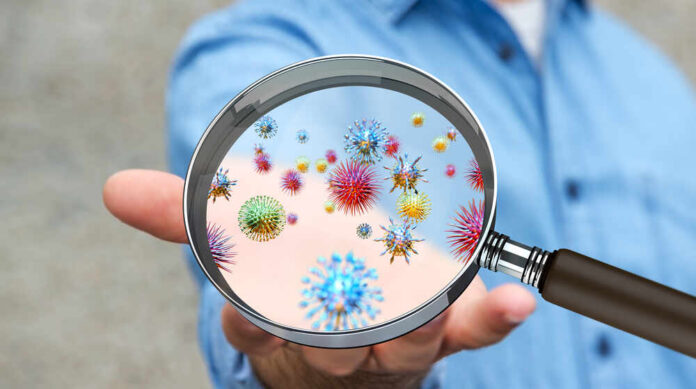
A microscopic organism living in your tap water, your swimming hole, and the soil under your feet can eat your brain from the inside out — and scientists say most of the world has no idea it exists.
Quick Take
- Free-living amoebae found in soil and water worldwide can invade the human brain, eyes, and central nervous system, with mortality rates that dwarf most recognized infectious diseases.
- Naegleria fowleri, Acanthamoeba, and Balamuthia mandrillaris are the primary species behind deadly human infections, yet most physicians rarely encounter or recognize them.
- Rising water temperatures, aging infrastructure, and climate shifts are expanding the geographic range where these organisms thrive and where human exposure becomes more likely.
- These amoebae also act as living shields for other dangerous pathogens, harboring bacteria inside themselves and protecting them from disinfectants like chlorine.
The Organism Your Doctor Has Probably Never Treated
Free-living amoebae (FLA) are single-celled organisms that exist independently in freshwater lakes, rivers, soil, swimming pools, hot tubs, and even municipal water distribution systems. Unlike the amoeba most people vaguely remember from high school biology, certain species in this group are capable of infecting and killing humans. The Centers for Disease Control and Prevention (CDC) identifies four genera — Acanthamoeba, Balamuthia, Naegleria, and Sappinia — as confirmed causes of disease in humans and animals. [5]
Naegleria fowleri earns the most alarming nickname in microbiology: the brain-eating amoeba. It enters the body through the nose during water exposure, travels along the olfactory nerve, and destroys brain tissue in a condition called primary amebic meningoencephalitis. Death typically follows within days. [3] Acanthamoeba causes a different but equally devastating central nervous system condition called granulomatous amebic encephalitis, and it is also the leading infectious cause of severe keratitis — a blinding eye infection — among contact lens wearers. [5] Balamuthia mandrillaris rounds out the trio, capable of infecting even healthy individuals with no underlying immune deficiency. [6]
Rare Does Not Mean Safe When the Fatality Rate Is Near Total
The CDC technically classifies these infections as rare, and statistically that is accurate. [5] But rare and low-risk are not synonyms. Naegleria fowleri infections carry a fatality rate exceeding 97 percent. [11] Granulomatous amebic encephalitis caused by Acanthamoeba and Balamuthia is similarly lethal, with most patients dying before a correct diagnosis is even confirmed. [6] The rarity of documented cases likely reflects underdiagnosis as much as true low incidence — these infections mimic bacterial meningitis and viral encephalitis, and few clinical labs routinely test for amoebae. [4]
There is a well-established pattern in public health where low-incidence, high-severity threats receive inadequate attention until a dramatic cluster of deaths forces a response. Free-living amoebae fit that pattern precisely. Surveillance is thin, diagnostic capacity is limited, and the disease burden is genuinely difficult to quantify. [4] Scientists publishing in early 2026 called for urgent global action, warning that the threat is underappreciated and that current monitoring infrastructure is not equipped to detect or respond to a significant outbreak. [4]
Warming Water and Crumbling Pipes Are Making Things Worse
Naegleria fowleri thrives in warm freshwater, and its documented range has expanded northward in the United States over the past two decades as water temperatures rise. [2] Cases once confined to southern states have appeared in the Midwest and Mid-Atlantic. Climate change is the primary driver, but aging water infrastructure compounds the problem. Biofilms inside old pipes and plumbing systems provide ideal environments for amoebae to colonize and multiply. [1] Inadequate chlorination in aging distribution systems allows populations to grow unchecked.
🚨 Scientists Sound the Alarm:
Dangerous "Brain-Eating" Amoebas Spreading Globally…
Free-living amoebae like Naegleria fowleri are an underappreciated public health threat. These resilient microbes survive high temps, chlorine, and aging water systems and can even act as…
— ₴₮₳₵₭฿ⱠɆɆĐ 👾 (@AIPromptLord) June 6, 2026
There is a secondary threat that rarely makes headlines. Free-living amoebae actively ingest bacteria, but some bacteria have evolved to survive inside the amoeba rather than be digested. Legionella, the bacterium responsible for Legionnaires’ disease, is the most recognized example. Living inside an amoeba protects Legionella from chlorine disinfection and from the human immune system. [1] In this sense, amoebae function as incubators and armored transport vehicles for other dangerous pathogens. Controlling one threat may require controlling the other first.
What a Reasonable Response Actually Looks Like
The scientific community is not calling for panic, but the January 2026 warnings from researchers represent a serious and credible escalation in concern. [4] Better diagnostic training for clinicians, expanded environmental monitoring of water systems, and updated infrastructure investment are the practical responses that would actually reduce risk. Waiting for a high-profile cluster of deaths before acting is the more expensive and more tragic option. The organisms are already in the water. The question is whether public health systems are paying attention. [9]
Sources:
[1] Web – Scientists sound the alarm as dangerous amoebas spread globally
[2] Web – Free-living amoebae and emerging public health challenges in a …
[3] Web – The Dangers of Free-living Amoebae – Morning Sign Out at UCI
[4] Web – Opportunistic free-living amoebal pathogens – PMC
[5] Web – Scientists call for urgent action as dangerous amoebas spread …
[6] Web – DPDx – Free Living Amebic Infections – CDC
[9] Web – Amoebiasis due to free-living amoebae | About the Disease | GARD
[11] Web – Scientists sound alarm as dangerous amoebas spread globally