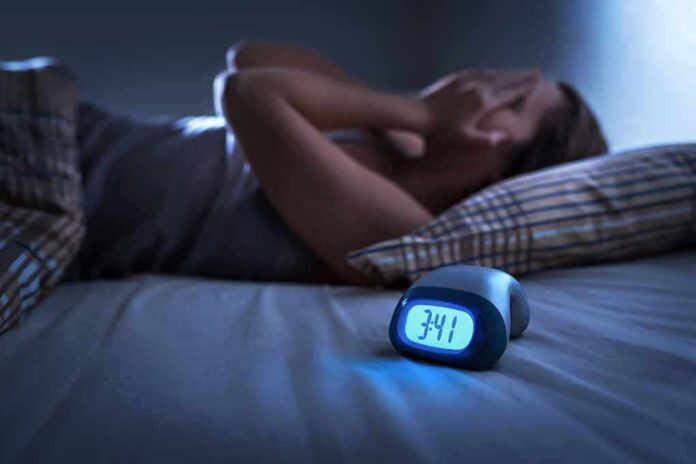
A wristband meant to help you sleep can end up wrecking it instead.
Story Snapshot
- Doctors coined the term “orthosomnia” in 2017 after patients grew obsessed with perfecting their sleep tracker scores.
- The fixation can create the very insomnia the device was supposed to prevent.
- Roughly one in three American adults now track their sleep with a wearable or app.
- Studies estimate orthosomnia affects somewhere between 3 percent and 30 percent of tracker users, depending on how it’s measured.
How Doctors First Spotted The Problem
Sleep researchers at Rush University Medical Center and Northwestern University noticed something odd in their clinic. Patients kept showing up clutching printouts from their fitness trackers, insisting their sleep was broken even when they felt fine. In 2017, three of these cases became a published paper. The doctors gave the pattern a name: orthosomnia, from “ortho” meaning correct and “somnia” meaning sleep.
The word describes people who become so fixated on hitting a perfect sleep score that the chase itself keeps them awake. It’s not laziness or bad habits causing the insomnia. It’s the constant checking, worrying, and re-checking of numbers on a screen. The tracker becomes homework, and nobody sleeps well while grading a test.
Why This Is Not A Fringe Problem Anymore
Wearable sleep tracking has exploded far past niche hobbyists. Close to one in three American adults now use some device or app to monitor how they sleep. That means millions of people are getting nightly report cards on something that used to be private and unmeasured. Some check that data before they even sit up in bed each morning.
Researchers have tried to pin down exactly how common orthosomnia is, and the numbers vary a lot. One population study found rates between 3 percent and 14 percent depending on how strictly they defined the condition. Another survey found nearly one in three tracker users screened positive for orthosomnia risk when asked about anxious, obsessive thoughts tied to their data.
What The Anxiety Actually Looks Like
People with orthosomnia don’t just glance at their app once a day. Researchers describe repeated checking, panic over a low score, and even distress at the thought of losing the device itself. That’s a telling detail. When someone feels anxious about being disconnected from a gadget meant to relax them, the tool has stopped serving its purpose entirely.
A separate qualitative study in Europe found the same pattern among everyday users, not just clinical patients. Researchers described an “excessive preoccupation” with tracker results that fed anxiety rather than easing it. The device promised control over sleep. Instead, it handed users a new source of nightly worry to lie awake with.
The Experts Who Coined The Term Still Push Back On Panic
Northwestern sleep medicine expert Sabra Abbott, who helped name the condition, describes it plainly as unhealthy or excessive concern with achieving perfect sleep. Notably, the Sleep Foundation and the American Academy of Sleep Medicine (AASM) are careful to say orthosomnia is not an officially recognized medical disorder yet. It’s a documented pattern doctors keep seeing, not a diagnosis you’ll find in a formal manual.
Where That Leaves Anyone Wearing A Ring Or Watch To Bed
Sleep specialists aren’t telling people to throw their devices in the trash. The data itself isn’t the villain. The obsession with treating every dip in score as a crisis is what turns a helpful tool into a stressor. Clinicians who use these trackers in therapy now watch closely for patients who start ruminating over numbers instead of just noticing patterns.
The larger lesson fits a pattern conservatives have long pointed to. Constant measurement, constant grading, constant self-surveillance rarely produces the peace of mind the technology promises. Sleep, like so much else in life, used to be something people simply did. Now it’s tracked, scored, and judged before breakfast. The fix isn’t a better app. It’s remembering some things work best left alone.
Orthosomnia is real. Your fitness tracker obsessing over sleep scores can actually make sleep worse. The anxiety about optimizing every metric becomes the problem. Your body doesn't need perfect data. It needs consistent rest, real darkness, and your phone across the room.
— Health Declassified (Formerly The Yakking Show) (@HealthDeclass) September 21, 2026
For now, the researchers who named orthosomnia say the goal isn’t perfection. It’s rest. A bad night’s sleep score doesn’t mean a person is broken. It just means the body did what bodies do, which is vary night to night, long before anyone strapped a sensor to their wrist to keep score.
Sources:
time.com, pmc.ncbi.nlm.nih.gov, publications.ergonomics.org.uk, academic.oup.com, sleepreviewmag.com, mdpi.com