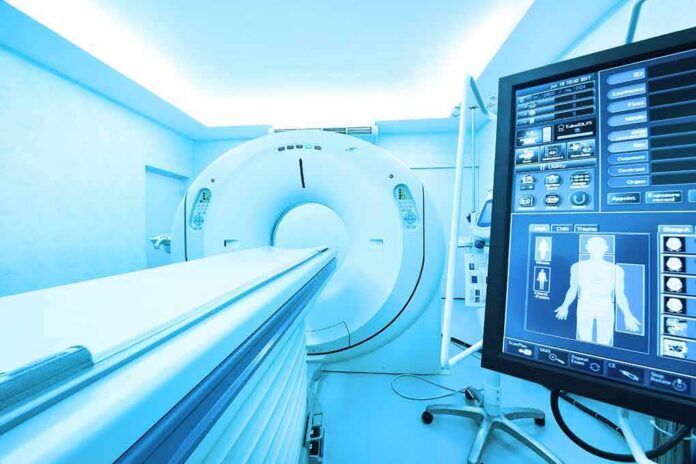
A baseline whole-body scan can find silent problems you did not know you had—but it cannot yet promise you will live longer.
At a Glance
- Whole-body MRI can detect some cancers and other issues in people without symptoms.
- Companies market “hundreds of conditions” detected, but clinical outcome proof is thin.
- Major medical groups do not recommend routine full-body scans for healthy people.
- Incidental findings are common and often lead to more tests without clear benefit.
What the scan actually does in under an hour
Whole-body magnetic resonance imaging creates detailed pictures from head to pelvis without radiation or contrast. Companies like Prenuvo say their scan can screen across many organ systems and may spot cancer-related changes before symptoms. They position it as an add-on to normal care, not a replacement for mammograms, colonoscopy, or other standard tests. That framing matters. It sets right expectations: this is an extra sweep for hidden issues, not a magic shield.
Clinical research shows a real, but modest, cancer detection rate. A 2026 meta-analysis pooling studies in people without symptoms found about 1.57% had confirmed cancer detected by whole-body magnetic resonance imaging. That is not nothing. If you scan 1,000 people, you might find around 16 real cancers. For a subset, earlier detection can change the path ahead. But a detection rate near two in 100 also means most scans will not find cancer.
Where the promise meets the proof
Companies highlight stories of early cancers caught and aneurysms or cysts flagged. Prenuvo’s internal follow-up claims that 2% of scans suggested cancer and that about half of those biopsied had cancer. The company also cites a very low false negative rate. Those numbers, if replicated, would be strong. But they are company-reported, not independently verified. Wise shoppers ask for outside audits and peer-reviewed trials before they trust headline figures with life decisions.
Medical societies keep their bar high. The American Cancer Society says no major medical group recommends full-body magnetic resonance imaging for people without a specific need, and it warns about downstream tests, false reassurance, and high costs. That stance tracks with standard thinking in medicine: prove that a test helps people live longer or better before rolling it out to everyone. Early detection is a tool, not an outcome by itself.
Incidental findings: the anxiety tax
Scans pick up many small abnormalities. Most are harmless. Reviews report that a large share of asymptomatic people will leave with at least one incidental finding on a whole-body scan. One pooled analysis estimated that critical or unclear findings show up in about a third of screened people. Many will need follow-up imaging or visits. Some will face biopsies that prove benign. Peace of mind can flip to a month of worry and bills—without any net health gain.
Supporters counter that knowledge is power. They argue that a clear baseline helps doctors track change over time and can nudge people into better habits. That is plausible, and some patients value that signal. But the burden of proof still sits with those selling the scan. The strongest path forward is simple: run independent, multi-year studies that track treatment changes, complications, costs, and—most important—survival and quality of life.
How to make a clear-eyed decision
Ask what problem you want to solve. If you are average risk and up to date on proven screenings, the added yield from a baseline whole-body scan is small, and the odds of an incidental detour are real. If you have elevated risk or a strong family history, talk with your doctor about targeted imaging first. If you still want a full-body scan, demand plain-language reporting, clear follow-up pathways, and a promise it will not delay proven tests.
Press for metrics that matter. Detection rates are not enough. Ask the provider for independent data on how many scans led to life-saving treatment, how often findings were false alarms, and how much downstream care cost. That is not being cynical. That is common sense stewardship of your time, your wallet, and your health.
Bottom line for busy adults
Whole-body magnetic resonance imaging can find hidden disease in a small percent of healthy people, and it avoids radiation. Marketing stretches beyond the evidence, and medical groups remain unconvinced for routine use. If you buy in, do it with eyes open: keep guideline screenings on schedule, plan for possible follow-up, and judge the value by outcomes you can feel—more healthy years, fewer harms—not by how many pages the report prints.
Sources:
mindbodygreen.com, pubmed.ncbi.nlm.nih.gov, prenuvo.com, cbsnews.com, rsna.org, michiganmedicine.org, uhhospitals.org