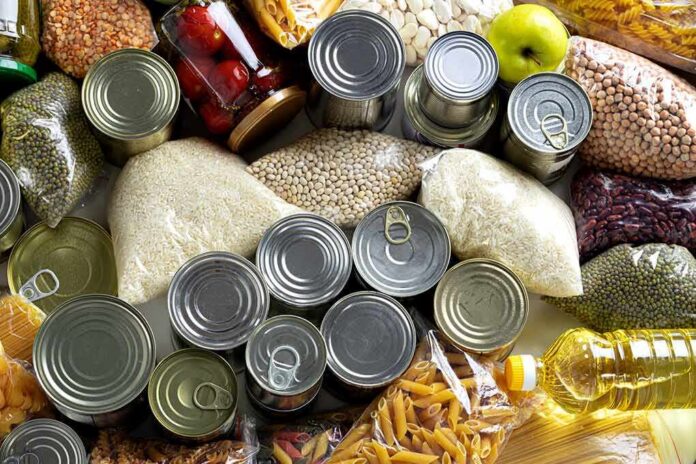
A massive French study tracking more than 112,000 people for nearly eight years found that common food preservatives raise the risk of high blood pressure and heart disease, even after accounting for overall diet quality.
Story Snapshot
- Researchers followed 112,395 French adults for an average of seven to eight years as part of the NutriNet-Santé project.
- High consumers of non-antioxidant preservatives faced a 29% higher risk of hypertension and a 16% higher risk of cardiovascular disease.
- Antioxidant preservatives, a separate class, were tied to a 22% higher hypertension risk on their own.
- Named additives include sodium nitrite, potassium sorbate, citric acid, potassium metabisulfite, rosemary extracts, and ascorbic acid.
What The Study Actually Measured
The research appeared in the European Heart Journal and leaned on repeated 24-hour dietary records instead of a single survey. That matters. Researchers could track what people actually ate over time, not just what they remembered eating once. The study identified 5,544 new cases of hypertension and 2,450 new cardiovascular disease cases among participants, giving the findings real statistical weight rather than a handful of flukes.
The hazard ratios tell the story plainly. People with the highest intake of total non-antioxidant preservatives showed a 1.29 hazard ratio for hypertension and a 1.16 hazard ratio for cardiovascular disease compared to low consumers. Total antioxidant preservatives carried their own 1.22 hazard ratio for hypertension. Those numbers come straight from the published abstract, not a press release spin.
Which Additives Are Under Scrutiny
The European Society of Cardiology and the American College of Cardiology both confirmed the same core numbers in their own summaries, which is worth noting because independent write-ups rarely match this closely. Secondary coverage then named the specific culprits: sodium nitrite, potassium sorbate, citric acid, potassium metabisulfite, rosemary extracts, and ascorbic acid showed up repeatedly across subgroup breakdowns tied to processed foods.
Here’s the twist that should make every parent raiding the pantry pause: citric acid and ascorbic acid sound harmless. They show up on vitamin bottles and orange juice labels. But in this study they’re flagged in their role as industrial additives in packaged products, not as the natural compounds found in fresh fruit. That distinction gets lost fast once headlines start flying.
Why This Isn’t The Final Word Yet
This is an observational cohort study, meaning it tracks patterns rather than proving direct cause and effect in a lab setting. Diet, income, smoking, and activity levels all tangle together in real life, and no single study fully untangles them. That’s a legitimate limit worth remembering, even as the size and design of this cohort make it harder to wave away than smaller surveys.
What Conservatives Should Take From This
This study lands squarely in favor of personal responsibility and informed choice, not government mandates. Americans don’t need a new federal agency or a ban to read an ingredient label and decide what they’re willing to feed their family. The data gives consumers a clear, science-backed reason to choose fresher, less processed food.
Food manufacturers have an obvious financial interest in keeping preservative risk framed as unsettled. That’s a normal business incentive, not a scandal. But it means shoppers should treat label-reading as their own job, not wait for Washington to sort it out. The NutriNet-Santé findings arm regular people with exactly the kind of practical, plain-English information that free citizens are supposed to have.
The Bigger Picture On Processed Food
This study doesn’t stand alone. Earlier research on ultra-processed foods has already linked them to higher hypertension and cardiovascular risk across multiple countries and cohorts. The preservative findings extend that pattern rather than inventing a new one, reinforcing a message that’s been building in nutrition science for years: the more a food is engineered in a factory, the more it seems to cost your heart down the road.
Scientists still want replication in other countries and biomarker testing to confirm how much preservative actually ends up in the bloodstream. Those are the next logical steps, not signs the current findings are shaky. For now, the honest takeaway is simple: check labels, favor fresh over packaged when you can, and treat this study as a serious nudge rather than a verdict waiting on an appeal.
Sources:
mindbodygreen.com, pmc.ncbi.nlm.nih.gov, medicaldaily.com, sciencedaily.com, food-safety.com