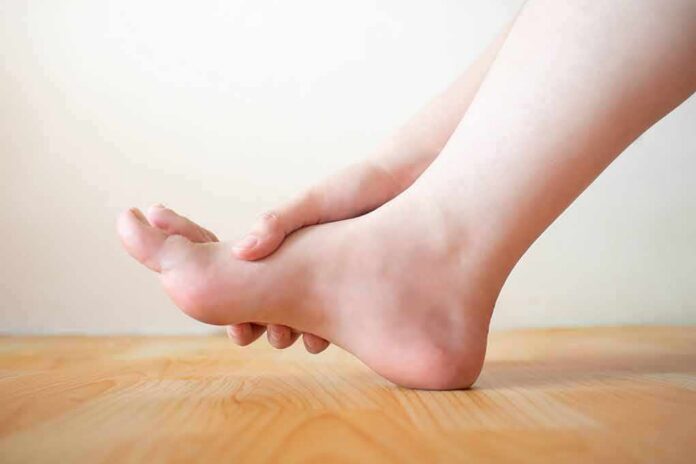
Your toes curl because shoes squeeze and tendons adapt—then the bend can lock in.
Story Snapshot
- A physician video explains hammer toe and urges shoes with a higher, wider toe box
- Orthopedic references link narrow and high-heeled shoes to toe bending and pain
- Muscle imbalance and long pressure can tighten tendons and fix the deformity
- Injury, foot shape, and disease can also play a role beyond footwear
Why toes curl: the shoe squeeze and the tendon trap
The Talking With Docs video lays out a simple fix that many ignore: give your toes room. The speaker recommends a high toe box to cut friction and pressure on the smaller toes. Orthopedic guidance backs this. Narrow shoes push toes down and in. High heels drive weight forward and bend them more. Over time, that bend is not just a pose. It becomes your new normal if the soft tissues tighten.
Cleveland Clinic describes the shift in plain terms. Constant pressure forces a toe out of line. Then the tendons and small muscles adapt to that position. After long enough, the toe does not straighten on its own. This change can move from flexible to rigid. Pain, corns, and calluses often follow because the shoe rubs the raised joints.
Footwear is step one, not the whole story
Major medical sites agree on the first step: pick shoes with a wide, deep toe box, lower heels, and enough length. The Mayo Clinic and MedlinePlus both say tight or short shoes are common causes. They also urge roomy shoes to prevent rubbing and pressure. This is common sense and lines up with how many people live and work. If your toes climb a ramp all day in tight leather, they will curl to survive.
Footwear is not the only driver. Some feet are born with traits that lean toward hammer toe. Past injuries, bunions, flat feet, and high arches can shift load to the smaller toes. Inflammatory arthritis and nerve disorders can change muscle pull and balance. Diabetes can alter sensation and healing. These factors can tip a mild bend into a problem that hurts with every step.
How to read your toes: flexible versus rigid
Most people learn this the hard way, when the toe stops obeying. A flexible hammer toe can still straighten with gentle push or taping. A rigid one will not. That split matters because it guides treatment. Roomy shoes, toe sleeves, pads, and taping can help flexible cases feel better and slow rubbing. These steps aim to lower pressure and give tendons a chance to relax. They help comfort and function even if they do not fully reverse the bend.
Rigid toes often need more than pads and patience. When pain persists, doctors may discuss surgery to straighten the toe and restore shoe fit. Policies and textbooks place shoe changes and padding first. They reserve surgery for cases that fail conservative steps or have wounds, severe pain, or fixed deformity that blocks normal shoes. One clear rule helps anyone at home: if the toe will not budge, or if the skin breaks or turns red and hot, get an exam soon.
What to buy, what to skip, and when to see a pro
The shoe aisle is crowded, but the checklist is short. Look for a soft upper, a high and wide toe box, and enough length so your longest toe has room. Many people have a second toe longer than the big toe, so check that one first. Skip narrow points and steep heels. Add simple pads where a shoe rubs. A store can sometimes stretch the toe box to stop hot spots. These moves match what clinicians teach day one.
One note of caution fits the facts. The video snippet does not list the speaker’s credentials, and it offers only a short quote we can verify. That said, the shoe advice aligns with orthopedic guidance and the known tendon mechanics in standard references. The bottom line fits common-sense values: fix the cause you can control first. Keep your toes straight by not forcing them to live in a curl. Then ask a clinician if pain or stiffness lingers.
Sources:
youtube.com, orthoinfo.org, msdmanuals.com, my.clevelandclinic.org