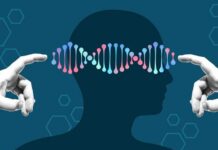
A speck-sized gland deep in your brain may be quietly tipping the odds on how well you sleep, how fast you age, and how close Alzheimer’s gets to your front door.
Story Snapshot
- The pineal gland makes melatonin, and research increasingly links pineal wear-and-tear to aging and Alzheimer’s-related changes.
- Human tissue studies report pineal calcification and buildup of proteins associated with Alzheimer’s pathology alongside melatonin decline.
- Peptides derived from pineal research, including Epithalon, sit at the center of a longevity debate because studies report telomerase activity and reduced mortality, but large Western RCTs remain limited.
- A separate 2026 Duke-led line of work highlights blood piRNAs as powerful short-term survival predictors, fueling demand for measurable “aging coordination” markers.
The Pineal Gland’s Real Job: Nighttime Command and Control
The pineal gland sits near the center of the brain and behaves less like a “mystery organ” and more like a biological timekeeper. Its marquee product, melatonin, helps coordinate sleep timing, immune rhythms, and cellular repair schedules that run best when the lights go out. Aging complicates that arrangement. Melatonin output tends to fall with age, and sleep fragmentation becomes the first domino for inflammation, metabolic drift, and cognitive strain.
Readers over 40 already know the lived version: you wake earlier, you bounce back slower, and the margin for late-night mistakes shrinks. The pineal angle matters because it suggests those changes may not be only “lifestyle,” but also organ-level decline. That framing shifts the longevity conversation from motivation and willpower to maintenance and measurement: what is physically changing inside the pineal as decades stack up, and what does that predict?
What Aging Looks Like in Pineal Tissue, Not in Wellness Ads
Researchers examining pineal glands across age groups report changes that sound mundane but carry heavy implications: calcification can appear early in life and often increases with age; cells can be lost; supportive glial activity can rise; and the tissue can accumulate biological “exhaust,” such as lipofuscin. The more provocative findings connect pineal degeneration to Alzheimer’s disease patterns, including associations with amyloid-beta and phosphorylated Tau, alongside reduced melatonin.
The conservative, common-sense takeaway: treat this as signal, not salvation. Tissue studies can show correlation and plausible pathways without proving a single master switch. Still, it’s hard to ignore the consistency of the theme. If the pineal’s output helps schedule repair at night, and that output degrades while Alzheimer’s pathology rises, the pineal becomes a reasonable suspect in the lineup, even if it’s not the only culprit.
Epithalon and the Peptide Divide: Promising Data, Incomplete Proof
Epithalon enters the story through a very specific lineage: Russian research beginning in the 1980s, tied to Professor Vladimir Khavinson’s work extracting and studying pineal-derived peptides. The claims that keep getting repeated are the ones that grab a tired reader by the collar: reported melatonin normalization, telomerase activation, extended cellular lifespan in lab settings, and human studies suggesting lower mortality in older populations, including cardiovascular contexts.
Skepticism is not cynicism here; it’s basic consumer self-defense. Western medicine typically demands large, well-controlled randomized trials before it treats a therapy as established. Much of the Epithalon enthusiasm draws from studies and summaries that, while intriguing, don’t yet settle every question about dosing, long-term safety, endpoints, and reproducibility across independent teams. A clinic can offer a protocol; that doesn’t automatically mean the science has matured into standard-of-care.
2026’s Twist: Blood piRNAs Predict Survival Better Than the Usual Suspects
A Duke-led study reported that a small set of circulating piRNAs could predict two-year survival with striking accuracy in older adults, outperforming some familiar markers like age and cholesterol in that specific short-term prediction window. That finding matters even if piRNAs aren’t “pineal markers” in a direct, proven sense. It reinforces a new reality in longevity: the public wants numbers that claim to forecast near-term outcomes, not just advice about walks and salads.
This is where the pineal story hooks into the broader market. A gland tied to melatonin and circadian order fits the modern “coordination” model of aging: the body fails when systems stop syncing. Biomarkers like piRNAs sell the promise of early detection. Peptides like Epithalon sell the promise of intervention. The uncomfortable gap sits in between: prediction is not prevention, and correlation is not cure.
The Supplement Gold Rush: “Brain Detox” Claims Meet the Evidence Wall
Pineal-focused supplements have surged alongside the research headlines, often borrowing scientific vocabulary while making claims that sound like late-night TV: detoxification, memory boosts, and “pineal activation.” Consumer-style reports have scrutinized products such as Pineal Guardian X and Pineal XT, emphasizing a recurring problem in the supplement economy: marketing moves faster than validation. Melatonin itself has evidence for circadian support, but that doesn’t automatically validate sweeping claims about reversing calcification or preventing dementia.
Supplements can have a place, yet the buyer deserves clarity: ingredient doses, realistic claims, and evidence that matches the promise. The pineal gland deserves scientific seriousness, not mystical branding.
What a Practical Reader Can Do Without Joining a Cult of Longevity
Start with what the pineal undeniably touches: sleep timing, light exposure, and nightly routine. Dark nights, consistent bedtimes, and morning light remain the low-cost levers that align with how melatonin biology actually works. Next, treat testing trends with humility. Biomarkers can guide conversations with clinicians, but no single panel can replace judgment, family history, and the basics of cardiovascular and metabolic health that drive so much downstream risk.
The open loop is the one researchers are now chasing: whether pineal-targeted strategies can do more than improve sleep and instead alter trajectories of neurodegeneration and mortality in rigorous trials. Epithalon may end up as a legitimate tool, or it may remain a compelling hypothesis. Either way, the pineal gland has already forced a useful reframing: longevity isn’t only about adding years; it’s about keeping the body’s nightly repair crew showing up on time.
Sources:
https://pubmed.ncbi.nlm.nih.gov/41563514/
https://medicalxpress.com/news/2026-02-blood-longer.html
https://www.eurekalert.org/news-releases/1116021
https://ignitepeptides.com/anti-aging-peptides-longevity-science-2026/