Your brain’s ability to feel joy, stay motivated, and remember what matters may depend on a humble B-vitamin that also stands between your neurons and a common industrial metal.
Story Snapshot
- Biotin (vitamin B7) boosted dopamine production in brain models exposed to toxic manganese.
- Supplementing biotin restored mitochondrial function and reduced dopaminergic neuron loss.
- The findings tie a gut-linked vitamin to protection against Parkinson’s-like damage.
- Evidence remains preclinical, but it fits a broader pattern of vitamins shaping dopamine circuits.
Biotin Steps Onto Dopamine’s Main Stage
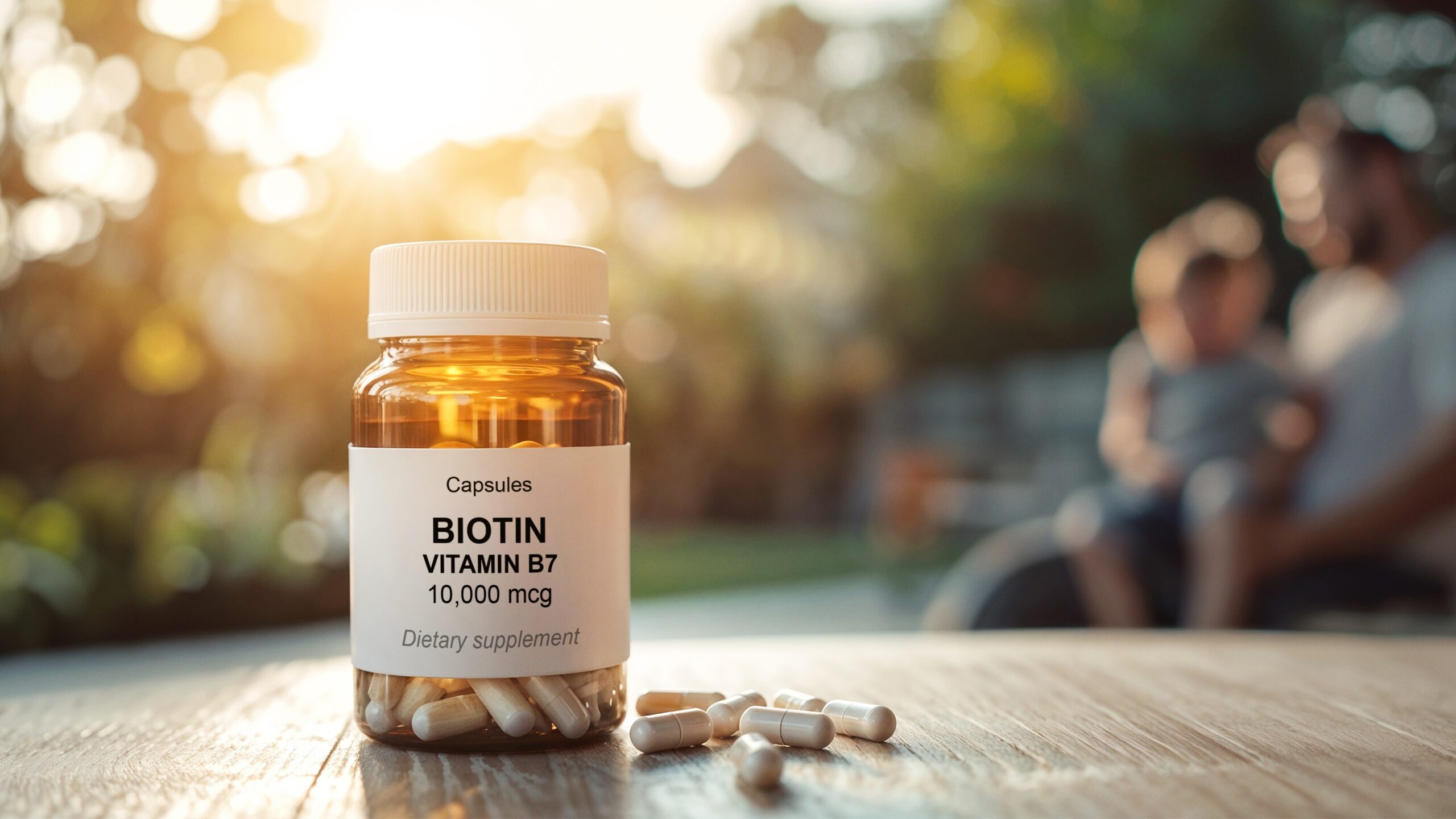
Researchers working within the FunGen-AD program put biotin under pressure: could this everyday B-vitamin help dopaminergic neurons survive manganese, a metal known to produce Parkinson’s-like symptoms with chronic exposure? In both fruit flies and human induced pluripotent stem cell–derived neurons, biotin did more than keep cells alive. It enhanced dopamine production, suggesting that this micronutrient feeds not just metabolism, but the very chemistry of motivation and movement itself.
Manganese neurotoxicity is no abstract hazard. Welders, miners, and workers in certain industrial settings can develop a parkinsonian syndrome, historically called manganism, that attacks the dopamine system. By showing that biotin reverses manganese-induced neurotoxicity in experimental models, the researchers carved out a new mechanistic link between nutrition, metal exposure, and neurodegenerative risk. For anyone who thinks vitamins are just “nice-to-have,” this pushes back with hard biological consequences.
Your 24/7 AI doctor is now live. No waiting. No appointment.
How One Vitamin Rescued Mitochondria Under Metal Stress
The study did not stop at counting surviving neurons. Under manganese stress, mitochondria—the power plants inside dopaminergic neurons—begin to fail, setting off oxidative damage and cell death. When biotin was added, mitochondrial function improved, and neuron loss declined in both fly brains and human neuron cultures. That combination of healthier energy metabolism and better survival under toxic stress echoes what many neurologists already suspect: save the mitochondria, and you might save the neuron.
From a common-sense, conservative perspective, this line of evidence supports a long-standing principle: robust, basic physiology often beats exotic intervention. Biotin is not a designer drug; it is a cofactor that our cells and even our gut bacteria routinely use. The strong mechanistic data justify serious attention, but not yet blind enthusiasm. Preclinical work, no matter how elegant, must clear the hurdle of human trials before anyone should treat biotin as a medical shield against metal exposure or Parkinson’s disease.
Free medical guidance, anytime. Start your chat today.
The Gut–Brain Axis, Manganese, and Parkinson’s Risk
The gut angle matters here. Biotin is partly produced by gut bacteria, and Parkinson’s disease has been re-framed as a multisystem disorder that often announces itself first in the intestines with constipation and microbiome disruption. When a vitamin linked to gut microbes turns out to enhance dopamine production and buffer neurons against manganese, the gut–brain axis stops sounding like a wellness slogan and starts looking like a mechanistic pathway that regulators and clinicians must eventually confront.
The implications for occupational health are obvious, even if they remain hypothetical. If future clinical work confirms that adequate biotin status meaningfully reduces manganese-related brain damage, then risk-management strategies for high-exposure workers would logically include not just better ventilation and lower exposure limits, but nutritional baselines as well. That approach aligns with common sense: combine environmental restraint with strengthening the body’s own resilience, instead of relying solely on after-the-fact pharmacology.
Vitamins Are Quiet Architects of Dopamine Circuits
This is not the first time a vitamin has rewritten dopamine biology. Researchers examining vitamin D found “conclusive evidence” that it affects the structural differentiation of dopaminergic neurons and their dopamine release machinery; when vitamin D is absent, presynaptic proteins mislocalize and dopamine release falls. Additional work shows vitamin D can increase amphetamine-induced dopamine release, underscoring its role in tuning dopaminergic tone in conditions where that system is dysregulated.
Layer biotin onto that picture, and dopamine looks far less like a simple “happy chemical” and far more like a system under the constant governance of micronutrients, gut-derived metabolites, and local circuit architecture. Other groups now show dopamine operating with pinpoint precision in small release hot spots rather than as a blunt global signal, and participating in memory devaluation, avoidance learning, and anxiety-related decision-making. When a system this intricate depends on basic vitamins for its development and defense, dismissing nutritional status as marginal becomes scientifically untenable.
Your health questions deserve instant support.
What Conservative Common Sense Demands Next
American conservative values emphasize prudence, responsibility, and respect for both evidence and personal agency. Those principles point in a clear direction here. The evidence strongly supports taking biotin seriously as a mechanistic player in dopamine production and neuroprotection under manganese stress, but it does not yet justify therapeutic promises beyond the lab. The responsible stance is to push for rigorous human studies, while resisting both regulatory panic and supplement-industry hype until those data arrive.
At the individual level, ensuring adequate intake of foundational nutrients like biotin and vitamin D, managing workplace exposures, and supporting gut health accord with common sense and current science. At the societal level, encouraging research that connects environment, nutrition, and brain resilience honors a basic conservative insight: complex systems fail less often when their fundamentals are strong. In that framework, biotin’s new role is not a miracle cure; it is one more reminder that the brain rewards those who maintain its simplest needs.
Sources:
MindBodyGreen – How vitamin D regulates the role of dopamine in brain cells
Mount Sinai – Discovery of dopamine receptors in a previously overlooked part of the brain
News-Medical – Study reveals how brain protein KCC2 influences reward learning
MSU Today – Dopamine’s unexpected role in memory devaluation
ScienceDaily – Biotin may shield brain from manganese-induced damage
CU Anschutz – New discovery reveals dopamine operates with surgical precision
NIAGADS/FunGen-AD – Vitamin that could protect against manganese-induced brain damage
Northwestern – How dopamine helps us learn to avoid bad outcomes
PubMed – Vitamin D and amphetamine-induced dopamine release