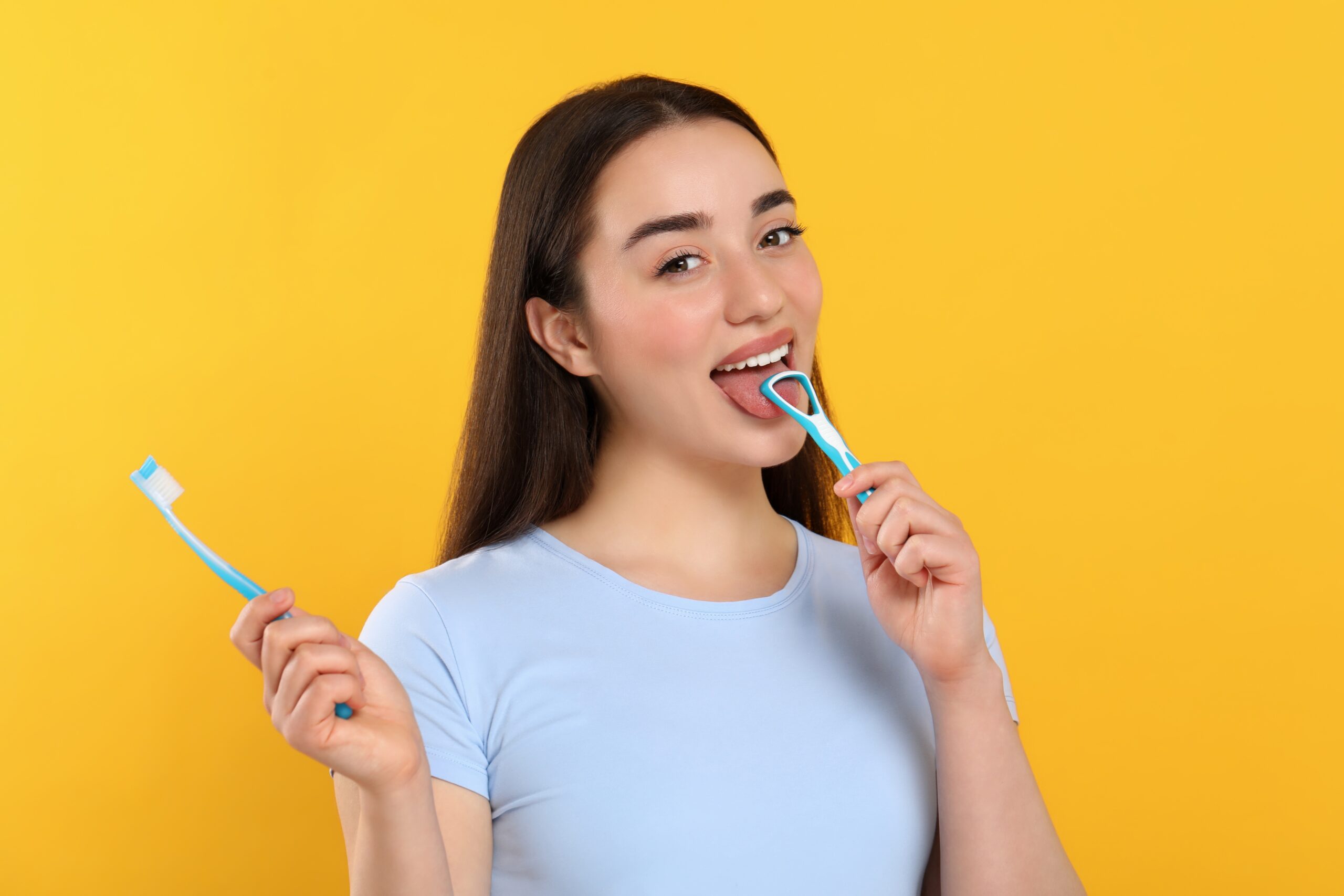
Your dentist knows your tongue harbors 90% of bad breath’s culprits, yet most skip cleaning it, dooming fresh breath efforts to failure.
Story Snapshot
- Tongue bacteria produce volatile sulfur compounds causing halitosis, plaque, and gum disease.
- Scrapers reduce VSCs by 75%, outperforming brushes at 45% in key studies.
- Daily rear-to-front cleaning prevents decay and boosts taste perception quickly.
- Recent research shows tool equivalence if technique is correct, but over-cleaning risks microbiome disruption.
Tongue as Bacterial Hotspot
Tongue papillae trap food debris and bacteria, forming coatings that generate volatile sulfur compounds. These VSCs cause persistent bad breath, with over 50% of cases originating here. Pathogens transfer to teeth and gums, fueling decay and gingivitis. Dentists like Dr. David Scharf highlight this overlooked reservoir, contrasting it with standard brushing that misses the tongue entirely. Studies from the early 2000s confirmed the tongue’s dominance in oral bacteria loads.
https://www.youtube.com/shorts/xXYRsImJf7c
Historical Roots and Modern Evidence
Ayurvedic traditions used tongue scraping for digestion and energy balance centuries ago. Western dentistry adopted it after 1990s halitosis research pinpointed tongue coatings. Journal of Periodontology trials showed plaque reductions, while International Journal of Dental Hygiene documented VSC drops. Pre-2020 studies established scrapers’ edge, with 75% VSC reduction versus 45% for brushes. Post-COVID hygiene trends amplified preventive focus on this simple step.
Got a health question? Ask our AI doctor instantly, it’s free.
Tools and Proven Techniques
Dentists recommend rear-to-front strokes twice daily using scrapers, brushes, or combinations. 2022 PMC studies found equal efficacy across tools when done correctly, debunking scraper superiority myths. Academy of General Dentistry endorses integration into routines for fresher breath and better taste within days. William S. Darr DDS stresses scrapers’ design for coating removal without gagging. Technique matters most, per NIH-backed reviews.
https://www.youtube.com/watch?v=uTBXQnF7Q8k
Patients gain confidence from reduced halitosis and enhanced food enjoyment. Underserved communities benefit from low-cost prevention, cutting dental visits and costs. Preventive dentistry shifts emphasize this habit, boosting scraper sales while saving public health dollars through fewer treatments.
Clear answers for common health questions start now.
Expert Consensus with Cautions
Delta Dental and UCLA Health back tongue cleaning for bacterial control. PMC authors report significant plaque and gingivitis drops. UCLA warns overzealous brushing disrupts oral microbiome diversity, a claim standing against uniform benefits in peer-reviewed trials. Facts favor benefits aligning with conservative self-reliance: simple daily action prevents bigger issues without overcomplicating hygiene. Further longitudinal studies could resolve microbiome debates.
Not sure where to start? Ask the AI doctor about your symptoms.
Sources:
Why Brushing Your Tongue is Important for Oral Health
Beyond the Brush: The Real Value of Tongue Cleaning and Oral Irrigators
The Benefits of Tongue Cleaning
PMC Article on Tongue Cleaning Efficacy
Tongue Hygiene: Unmasking the Forgotten Factor
PMC Review on Tongue Cleaners for Public Health
Exploring the Benefits of Tongue Scrapers: Insights from William S. Darr DDS
Do Tongue Scrapers Work?
Brushing Your Tongue Could Have Adverse Health Effects