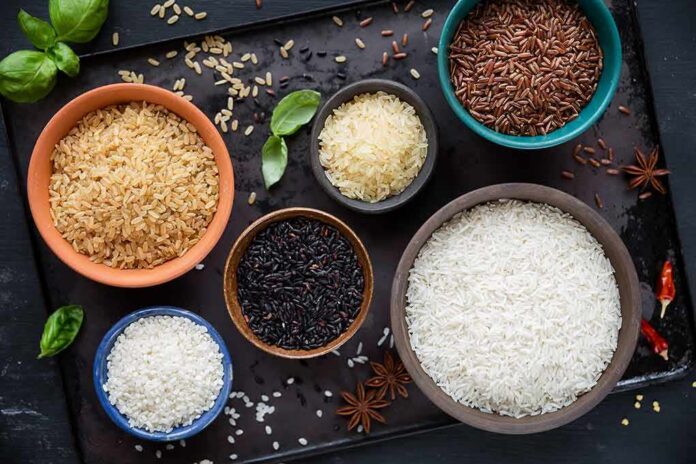
A grain of rice most people ignore on grocery shelves may hold a hidden health perk white rice does not have.
Quick Take
- Scientists studied 56 types of Japanese japonica rice and found rare fat compounds never before seen in rice.
- Black and green pigmented rice had the highest levels of these unusual fats.
- Lab tests showed these rice varieties digest starch more slowly than plain white rice.
- Slower digestion may help keep blood sugar steadier after meals, though human trials are still needed.
What The New Rice Study Actually Found
Researchers analyzed 56 japonica rice cultivars and discovered a brand-new group of fats in rice called fatty acid esters of hydroxy medium-chain fatty acids, or FAHMFAs. These bioactive lipids had never been reported in rice before. The team found them concentrated mostly in brown and green pigmented varieties, setting those grains apart from ordinary white rice on a molecular level.
The findings were confirmed through detailed lab testing, not just guesswork or a single sample. That matters because it means the fat compounds are real and measurable, not a fluke of one batch of rice. Scientists say this is the first time researchers have mapped this kind of lipid activity across so many rice cultivars at once.
Why Slower Digesting Starch Could Matter For Your Health
Beyond the unusual fats, researchers also tested how fast the starch in each rice type breaks down under simulated digestion. Black and green rice varieties digested more slowly than white rice. Slower starch breakdown means glucose enters the bloodstream at a gentler pace, which is generally seen as a good sign for blood sugar control.
That slower release could matter most for people managing weight or blood sugar swings. Fast-digesting starches, like those in white rice, tend to spike blood sugar quickly, then crash it. A steadier climb gives the body more time to respond, which researchers link to better long-term metabolic and heart health outcomes.
How This Fits Into What We Already Knew About Colored Rice
Pigmented rice has a long track record in nutrition research. Reviews covering dozens of studies already tie black, red, and purple rice to antioxidant activity and lower cholesterol markers, thanks largely to pigments called anthocyanins. This new lipid discovery adds a fresh layer to that picture, giving scientists another reason to take colored rice seriously as more than just a novelty grain.
Still, nutrition science has been burned before by hype outrunning evidence. Broader reviews of colored rice note that grain color alone does not reliably predict how a variety affects blood sugar, since results vary a lot between cultivars. That is a useful reality check. This study’s fat discovery is real and specific, but it does not mean every black or green rice bag on a store shelf works the same way.
What Comes Next For Rice Research And Everyday Eaters
Researchers behind this work say the next step is figuring out exactly how these newly found fats affect the human body, not just how they behave in a lab dish. Right now, the case rests on chemical analysis and simulated digestion tests, not long-term trials in real people eating rice over months or years.
That said, the direction of the evidence lines up with common sense many home cooks already follow: less processed, more colorful, whole grains tend to serve the body better than heavily milled white rice. This study gives that instinct real scientific backing, identifying the actual compounds that may explain why pigmented rice behaves differently in the body.
For now, swapping some white rice for a black or green japonica variety is a low-risk way to diversify your diet while researchers continue digging into exactly how these newly identified fats interact with human metabolism. Given the strong track record of pigmented grains in broader nutrition science, that swap looks like a reasonable bet even before every clinical detail is nailed down.
Sources:
sciencedaily.com, pubmed.ncbi.nlm.nih.gov, eprints.lib.hokudai.ac.jp