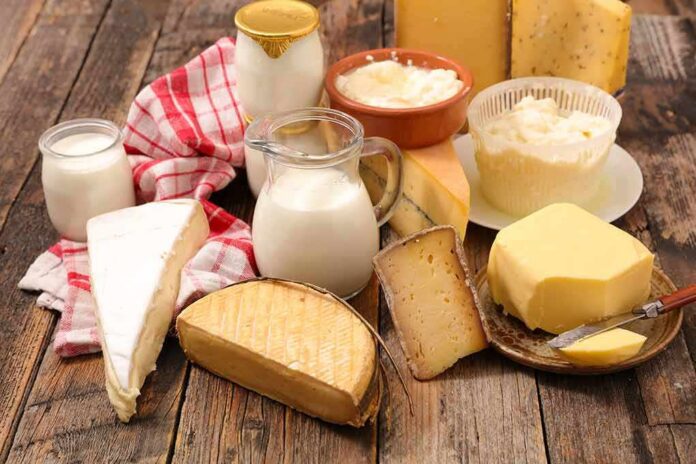
A quiet swap from dairy to plant drinks could leave teenage girls most short on iodine, the thyroid’s spark plug.
Story Snapshot
- Modeling shows dairy swaps can push iodine intake below safe levels in key groups.
- Teen girls and adult women face the steepest rise in projected inadequacy with partial swaps.
- Mandatory fortification blocks most losses without attacking plant-based choices.
- This is intake modeling, not lab-confirmed deficiency, so policy and labels matter.
What the new study actually measured
Researchers modeled what happens when people replace part or all of their dairy with store-bought plant alternatives. They used United Kingdom diet data and nutrient profiles from products on shelves. The model asked a simple question: if dairy goes down and plant alternatives go up, how do key nutrients shift? The answer hit iodine hardest. Even a 35 percent switch lowered average iodine intake by 9 to 21 percent across most groups, while a 50 percent switch cut it 13 to 28 percent.
The projected shortfall translates into more people below safe iodine intake. The model found that replacing only 20 to 35 percent of dairy pushed iodine inadequacy among girls 14 to 18 from 54 percent to 65 percent, and among women 19 to 49 from 32 percent to 42 percent. Full replacement produced the most dramatic picture, with adolescent inadequacy estimates climbing to 80 percent for girls and 72 percent for boys in the scenario tested.
Why iodine became the pressure point
The United Kingdom gets a large share of iodine from dairy. Plant alternatives vary a lot, and many lack iodine fortification. That gap makes the swap risky if shoppers do not check labels. The model also showed declines in calcium, riboflavin, and vitamin B12, especially for young children, teens, and adult women, but iodine moved the most and fastest when dairy dropped. In plain terms, the thyroid signal weakens first when iodine slips, and teens are the soft target.
The pattern is dose driven, not moral. The more dairy you replace with unfortified products, the bigger the projected drop. That is not a verdict on plant-based eating. It is a simple supply issue. Where dairy once covered iodine by default, many plant products do not. Without a plan, the math does not pencil out for vulnerable groups. That is a nutrition system problem more than a personal virtue test.
What fixes work without the food fight
Mandatory fortification solved most of the problem inside the model. When plant-based dairy alternatives carried iodine, calcium, riboflavin, and vitamin B12 at set levels, the projected declines disappeared for most groups. Adding iodine-fortified bread tightened the safety net further. Adolescent girls still needed attention, but the gap shrank and looked manageable with targeted steps. That result points to labels and standards, not lectures, as the lever that works.
Advocates for plant-based diets agree on that lever. The Vegan Society says it does not recommend unfortified plant milks and backs mandatory iodine fortification of plant-based products and iodized salt in bread. It advises choosing fortified, unsweetened plant milks with set iodine and calcium amounts. That stance lands close to the study’s policy path: make the carton do its share so consumers do not play nutrient roulette.
How to read modeling like a grown-up
The estimates come from a modeling study, not a trial that measured people’s urine iodine or thyroid hormones after a diet change. The results show projected intake and the share below a reference point. They do not claim a diagnosis of disease. That said, the model used current product data and real diet patterns in the United Kingdom, and it captured a clear dose-response. The strongest takeaway is practical: if the product is not fortified, the risk rises fast for teens and women.
Popular Dairy Alternatives Could Be Leaving You Short of Essential Nutrients | University of Surrey
A new study reveals that even partially replacing dairy products with plant-based alternatives could significantly reduce the intake of essential nutrients.
Replacing even a… pic.twitter.com/Fs3rJqKeTt
— Owen Gregorian (@OwenGregorian) November 9, 2026
If you drink plant-based milk, pick one that lists iodine and calcium. If you bake or buy bread, support iodine fortification. If you run policy, standardize fortification and labeling so the shopper does not need a nutrition degree to keep a thyroid on track.
Sources:
nabu.science, independent.co.uk, newsweek.com