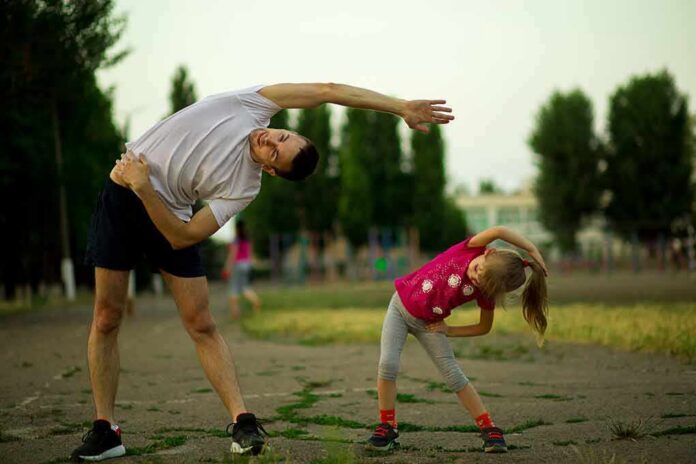
A four-year-old chasing a ball and a seventy-year-old lifting a dumbbell need very different workout advice, and new guidance on TODAY lays out exactly what each age group should be doing.
Quick Take
- TODAY’s October 2026 segment with NBC News medical contributor Dr. Akshay Syal breaks down exercise goals by age, from young kids to adults in their 60s and beyond.
- The advice covers aerobic activity, strength training, and balance work, with each one becoming more important as people get older.
- Major health groups, including the World Health Organization (WHO) and the Centers for Disease Control and Prevention (CDC), use similar age-based categories in their own guidelines.
- The goal isn’t just living longer. It’s staying strong and independent enough to enjoy those extra years.
What The TODAY Segment Actually Recommends
Dr. Akshay Syal joined TODAY to walk through exercise targets for different life stages, including keeping young kids and teenagers active, the bare minimum adults in their 20s and 30s need, and how to build strength through midlife. He also covered balance work for older adults. The segment frames movement as a lifelong habit that changes shape, not something you either do or quit doing as you age.
This isn’t a new theory. It fits a pattern public health agencies have followed for decades. The WHO divides its global activity guidelines into three main groups: ages 5 to 17, 18 to 64, and 65 and up, because the evidence and health risks differ at each stage. The CDC follows a nearly identical structure, right down to specific minute counts for kids, working-age adults, and seniors.
Why Kids And Teens Need Daily Movement
For children and teenagers, the standard is at least 60 minutes of moderate to vigorous activity every day, mostly aerobic, mixed with bone- and muscle-strengthening play at least three days a week. That’s not a suggestion dreamed up by one TV segment. It mirrors what the CDC and WHO have published for years, built on evidence that active kids grow stronger bones, better coordination, and healthier habits that carry into adulthood.
Adults in their 20s and 30s get a simpler bar to clear: a baseline amount of weekly aerobic activity, often cited as 150 to 300 minutes of moderate exercise, plus muscle-strengthening work at least twice a week. The segment describes these as the bare minimums, a floor rather than a ceiling, for people whose bodies can still recover quickly but who are starting to build habits that will matter decades later.
Midlife Shifts The Focus To Strength
By midlife, the emphasis moves toward preserving muscle, since the body naturally loses strength and bone density with age if nothing counteracts it. Strength training becomes less optional and more essential for staying functional later. This stage is often where people first notice the payoff of lifting weights or doing resistance work isn’t about looks anymore. It’s about protecting the ability to carry groceries, climb stairs, and stay off the sidelines in the decades ahead.
Balance Becomes A Life-Or-Death Priority After 60
For people 65 and older, the CDC says weekly activity should include aerobic work, muscle-strengthening, and balance training, with at least 150 minutes of moderate aerobic activity, such as 30 minutes five days a week. Balance exercises matter because falls are a leading cause of injury and lost independence in older adults. The National Institute on Aging echoes this, noting that even small amounts of movement throughout the day count toward those weekly totals.
Research scooping up multiple guidelines for elderly populations found a consistent theme: keeping even minimal activity levels, while adding balance and strength work, helps older adults avoid the kind of decline that leads to hospital stays or loss of independence. That’s a strong argument for treating a daily walk and a few balance exercises as basic maintenance, not a luxury reserved for the ambitious.
The Bigger Picture Behind Age-Based Guidelines
None of this guidance treats age as the only factor that matters. The WHO’s newer recommendations also address pregnancy, chronic illness, and disability, acknowledging that a person’s health status can matter as much as their birthday. Still, the consistent thread across TODAY’s segment, the CDC, and the WHO is that movement needs change as the body changes, and ignoring that shift carries real costs down the road.
For families trying to sort out what actually applies to them, the practical takeaway is straightforward. Keep kids moving every day, build strength habits early, protect muscle through midlife, and add balance work once the senior years arrive. None of it requires a gym membership or fancy equipment, just a commitment to matching the workout to the decade.
Sources:
youtube.com, today.com, nia.nih.gov, cdc.gov, patriciacusack.substack.com, iris.who.int, who.int, ncbi.nlm.nih.gov, pmc.ncbi.nlm.nih.gov