Frozen food quietly became America’s weeknight workhorse, and the numbers prove it.
Story Snapshot
- Nearly every U.S. household buys frozen food at least once a year.
- U.S. frozen sales topped $72 billion in 2022 and kept climbing.
- Frequent frozen users now make up 40% of shoppers, up from 35% in 2019.
- Cold storage networks feel the strain from growing demand.
From backup plan to meal plan staple
Shoppers once treated frozen food as a safety net. That changed when pandemic lockdowns pushed more meals into the home, and freezers became mission control. CNBC reported that nearly every U.S. household buys frozen food at least once a year, and sales reached more than $72 billion in 2022, up from more than $65 billion in 2020. That scale signals routine use, not a niche habit. People came for shelf life and stayed for fewer trips, lower waste, and faster dinners.
Trade groups now track habits that match what shoppers feel in their carts. The Food Industry Association and the American Frozen Food Institute say dollar sales rose more than 45% in the 52 weeks ending September 2025 versus 2019, reaching about $87 billion. Higher prices played a part, but the pattern also shows repeat buying. When families plan meals, frozen now gets a seat at the table, not the penalty box. That shift matters more than a one-off stock-up.
The new frozen playbook: save time, cut waste, keep flavor
Households worried about waste use frozen vegetables, fruit, and proteins because they last and portion easily. Put money into food that will not spoil and can stretch across meals. That habit strengthens when budgets tighten and schedules collide. Manufacturers also met shoppers halfway with better sauces, air-fryer formats, and cuisine variety. Convenience used to mean tradeoffs. Now a Tuesday can taste like a restaurant copycat without the price tag or prep mess.
Survey data backs up the idea that frozen moved from emergency to everyday. The Food Industry Association reports that frequent frozen users—those reaching into the freezer every few days or daily—now make up 40% of shoppers, up from 35% in 2019. Nearly one-third plan to buy more frozen food. That is intent, not just inertia. It shows a freezer door that opens for planned dinners, school lunches, and backup sides alike.
Cold chain pressure tells you how big this got
Americans do not see the cold chain, but they feel it when shelves go bare. CNBC highlighted how the global frozen market and the specialized warehouses behind it face capacity strain as demand grows. That stress is a real-world signal of throughput. When storage slots and trucks run tight, it tells you not only that people buy frozen, but that they do it often and across many categories. Logistics rarely lie about demand. If the system bulges, the aisle is moving product.
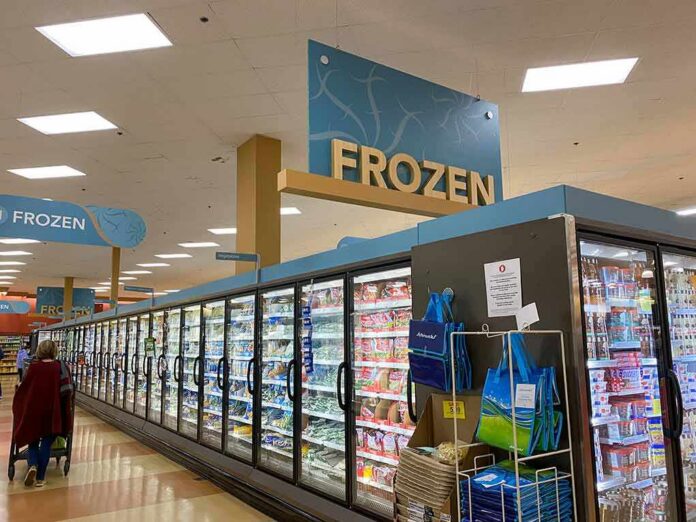
Retailers respond to throughput with more doors, better signage, and endcap displays. That visibility feeds discovery. A shopper who came for pizza walks out with dumplings, steam-in-bag broccoli, and smoothie packs. Each new trial plants a habit. Over time, the freezer becomes a set of building blocks. Ten minutes to dinner becomes normal. That is how categories stick—by solving problems the same way, over and over, without drama.
Price, volume, and what “growth” really means
Dollar growth alone can mislead if prices rise. But the strongest tell is behavior. The Food Industry Association reports that more people plan frozen meals by day and dish now than in 2023, which shows intent rather than emergency buying. CNBC’s household reach claim shows broad adoption. Put together, the picture is steady demand buoyed by convenience and lower waste. Families will reward products that save time, protect budgets, and still taste good.
Innovation sustains the trend. Industry materials put the market north of ninety billion dollars and reaching nearly every household, with new formats that suit air fryers, single-serve lunches, and family dinners alike. Consumers do not need a lecture on macroeconomics to explain why they fill their freezers. They need reliable meals that fit the clock and the wallet. Frozen delivers that blend better each year, which is why the aisle keeps expanding doors and attention.
What to watch next in America’s freezers
Expect three battles to shape the next phase. First, weeknight staples will keep getting cleaner labels and bolder flavors to win repeat spots. Second, smart packaging and portion sizes will chase waste-averse shoppers and older adults who want right-sized meals. Third, retailers will fine-tune assortment by region, because a freezer in Phoenix sells different hits than one in Pittsburgh. If the cold chain keeps up, the freezer will stay America’s most practical pantry.
Sources:
youtube.com, cnbc.com, grocerydive.com, ift.org, refrigeratedfrozenfood.com, reddit.com, conagrabrands.com