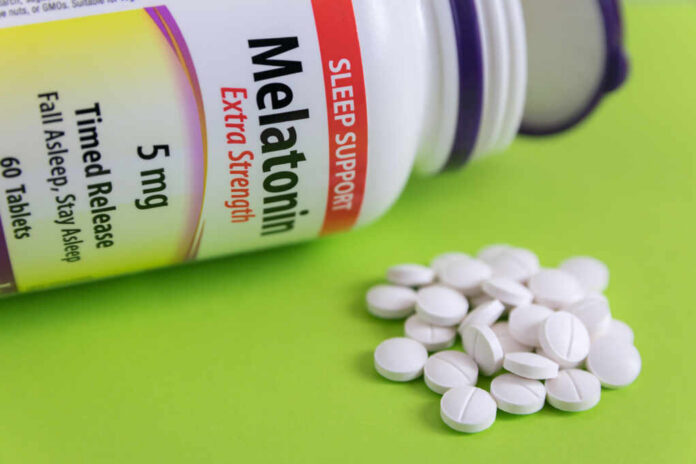
A sleeping pill ingredient may be quietly repairing your DNA while you rest — and night shift workers are at the center of a discovery that could reframe how we think about cellular aging.
Story Snapshot
- A new human study found melatonin supplementation increased DNA repair activity in night shift workers, a group at elevated risk from circadian disruption.
- The proposed mechanism goes beyond sleep quality — researchers are linking melatonin directly to cellular repair pathways, not just better rest.
- Scientists caution that increased DNA repair activity is not the same as proven slower aging; the biomarker gap matters enormously here.
- The finding sits in a broader wave of lifestyle-and-longevity research where promising early signals often outrun the actual evidence by a wide margin.
Why Night Shift Workers Are the Perfect Test Case
Night shift workers are essentially a natural experiment in what happens when your body’s internal clock gets systematically ignored. Disrupted circadian rhythms accelerate oxidative stress, suppress natural melatonin production, and have been linked to higher rates of certain cancers and metabolic disease. That makes them an ideal, high-stakes population for testing whether restoring melatonin levels does anything meaningful at the cellular level — and the new study suggests the answer may be yes.
The study’s core finding — that melatonin supplementation increased DNA repair activity — is biologically plausible in ways that go beyond the usual supplement hype. Melatonin is not simply a sleep hormone. It functions as a potent antioxidant and has been shown in laboratory settings to interact with pathways that govern how cells detect and fix damaged genetic material. Framing it as a DNA repair agent rather than a sleep aid is a meaningful scientific shift, not just clever marketing language.
The Gap Between a Biomarker and a Breakthrough
Here is where intellectual honesty demands some friction. Increased DNA repair activity is a biomarker — a measurable biological signal. It is not the same as demonstrated slower aging. The research community has learned this lesson repeatedly and painfully. Dozens of supplements have produced exciting biomarker results in early studies only to fail when tested against harder clinical outcomes. The melatonin finding is intriguing precisely because the mechanism is credible, but one study without published sample size, randomization details, or effect sizes cannot carry the weight of an anti-aging claim.
This pattern appears consistently across the current wave of longevity research. A recent study on arts engagement found that people who regularly visited museums, listened to music, or created art showed biological ages measurably lower than non-participants, with differences reaching nearly a full year on newer epigenetic measures like DunedinPACE and PhenoAge. [1][2] Those findings generated similarly enthusiastic headlines. In both cases, the underlying biology is genuinely interesting. In both cases, the jump from association or biomarker change to “this slows aging” compresses several missing steps that science has not yet filled. [3]
What Rigorous Follow-Up Would Actually Look Like
The melatonin study needs replication in an independent shift-worker cohort before anyone should adjust their supplement routine based on it. Beyond replication, researchers would need to disentangle whether melatonin is acting directly on repair pathways or whether better sleep quality is doing the heavy lifting indirectly. A factorial trial separating melatonin timing, sleep improvement, and circadian realignment would answer that question. Without it, the mechanism remains an educated guess dressed in promising data.
The more ambitious and scientifically meaningful next step would be measuring established epigenetic aging clocks — GrimAge, PhenoAge, DunedinPACE — before and after supplementation in a longitudinal design. DNA repair activity increasing is suggestive. Epigenetic age actually slowing would be consequential. Those are different claims requiring different evidence, and conflating them is exactly how supplement culture generates a decade of false hope from a single promising morning.
The Supplement Hype Problem Is Real and Predictable
Melatonin is cheap, widely available, and already culturally familiar as a sleep aid. That combination makes it a prime candidate for headline inflation. The framing of the original study as a “surprising new benefit” practically invites overinterpretation. The history of this field is littered with compounds that repaired biomarkers beautifully in early studies and did essentially nothing meaningful in larger trials. Melatonin may prove to be different. The biology gives reasonable grounds for optimism. But optimism is not evidence, and one unreplicated human study is not a prescription.
The Bottom Line on Melatonin and DNA Repair
The finding is worth watching closely, not because it proves anything yet, but because the target population is specific, the mechanism is plausible, and the research question is genuinely important. Night shift workers face real biological costs from circadian disruption, and any intervention that demonstrably reduces cellular damage in that group would matter. If independent replication confirms the DNA repair signal and longitudinal studies connect it to measurable changes in biological aging clocks, this becomes a significant story. Until then, it is a promising lead — and the supplement aisle does not deserve the credit quite yet.
Sources:
[1] Web – Repairing DNA damage: Scientists discover a surprising new benefit of …
[2] Web – Engaging with the arts linked to slower aging at the biological level
[3] Web – Arts engagement linked to slower biological ageing, study says