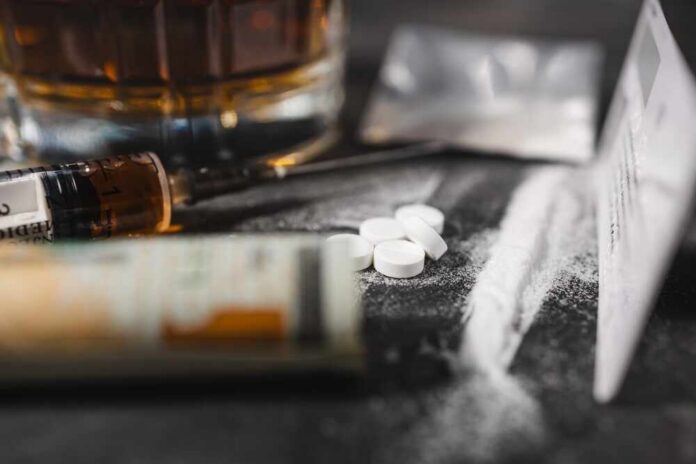
Meth and HIV are not just partners in risk; they form a feedback loop that can pull people into a spiral of addiction, illness, and broken systems faster than most experts once believed.
Story Snapshot
- Meth use does far more than fuel wild weekends; it sharply raises the odds of getting HIV and speeds how sick people become.
- HIV is not just a virus in the background; the infection itself appears to double the risk that some men will start using meth after diagnosis.
- Biology, behavior, and broken institutions work together, creating a cycle that punishment-only strategies rarely fix.
- Ignoring either side of this loop—drug or virus—means paying more later in disability, crime, and human wreckage.
Why meth and HIV travel together in the same destructive orbit
Methamphetamine shows up wherever HIV risk runs hottest because the drug packs exactly the traits that make dangerous sex and unsafe drug use feel attractive in the moment and disastrous afterward.[5] Meth boosts sexual drive, slashes judgment, and keeps people awake through marathon encounters, which means more partners, less condom use, and more chances for blood and bodily fluids to mix.[5][7] Federal summaries describe a clear pattern: meth-using men who have sex with men report more unprotected anal sex, more partners, and more injection practices that spread HIV.[5][7]
Real-world numbers strip away any illusion that this is just theory. Among men who have sex with men entering outpatient meth treatment, roughly six in ten tested HIV positive, and in inpatient programs the figure jumped to about eight in ten.[5] Government reports describe meth-using men who inject as dozens of times more likely to be HIV positive than their non-meth-using peers who inject.[5][7] These statistics reflect accumulated, repeated risk—each weekend of disinhibited behavior stacking the odds until infection becomes almost predictable.
Inside the body: how meth changes the course of HIV disease
Once HIV is in the picture, meth does not merely sit on the sidelines; it appears to worsen the infection’s grip. Reviews of clinical and laboratory data show meth users with HIV tend to have higher viral loads, faster drops in key immune cells, and more frequent treatment failure or nonadherence.[1][3] Researchers describe how meth tweaks immune pathways and brain chemistry in ways that favor HIV replication, especially when people miss doses of antiretroviral medications while binging.[1][3] That combination accelerates progression toward serious disease.
Cell-level studies help explain why the virus seems to thrive in this environment. Experiments with human immune cells show meth can trigger inflammatory loops involving molecules such as interleukin-1 beta that directly boost HIV’s ability to replicate inside CD4 T cells.[2] Reviews of meth and HIV co-exposure point toward combined damage in the brain, where viral proteins and drug-induced oxidative stress together amplify cognitive problems and mood disturbances.[1][3] Those changes do not just appear on scans; they surface as missed appointments, poor judgment, and deeper dependence.
Flipping the script: when HIV itself drives people toward meth
For years, the storyline stopped there: meth leads to HIV. Newer research is now turning that script around. A recent study of gay and bisexual men and other sexual and gender minority males found that those with an HIV diagnosis were about twice as likely to start using meth afterward compared with men without HIV.[4] Investigators point to HIV-related inflammation, its effects on brain dopamine systems, and the psychological shock of diagnosis as potential drivers of this first-time use.[4]
This does not erase the older evidence that meth fuels new HIV infections; it adds a second loop. People engage in high-risk behavior, acquire HIV, then face a mix of constant inflammation, stigma, and anxiety that can make a powerful stimulant feel like relief or escape. If HIV biology and diagnosis push some men toward meth, relying only on punishment after the fact misunderstands the problem’s roots and wastes taxpayer money on revolving-door crises.
Beyond blame: what a multilevel view changes about solutions
Debates inside the research world now center on scope. Traditional public-health messaging stresses individual choices—condoms, needle sharing, personal responsibility—and the evidence for meth increasing HIV risk through behavior is overwhelming.[5][7] Newer work, like that led by Dr. Adam Carrico, argues that biology and social structures belong in the same picture: meth alters immunity and brain circuits in people with HIV, while HIV-related inflammation and diagnosis raise meth initiation and relapse risk, all inside systems shaped by poverty, unstable housing, and weak treatment access.[1][3][4][8]
The most compelling approach uses this broader science to demand accountability up and down the chain. Individuals remain responsible for choices, but institutions are responsible for not stacking the deck. That means tying funding to treatment programs that actually reduce both meth use and new HIV infections, backing policing that targets dealers and traffickers rather than endlessly cycling sick users through jail, and insisting on data to show which community interventions reduce costs and suffering over time.[1][3][5][8]
Sources:
[1] Web – Associations between Methamphetamine Use and HIV among Men …
[2] Web – HIV, inflammation, and initiation of methamphetamine use in … – PNAS
[3] Web – HIV Diagnosis Linked to Higher Risk of Meth Use in Gay and …
[4] Web – [PDF] METHAMPHETAMINE and HIV – Ryan White HIV/AIDS Program
[5] Web – [PDF] Methamphetamine Use and Risk for HIV/AIDS – GovInfo
[7] Web – Methamphetamine: medical implications, HIV & Hepatitis – NATAP
[8] YouTube – Joint Effects of Methamphetamine and HIV on Brain Connectivity