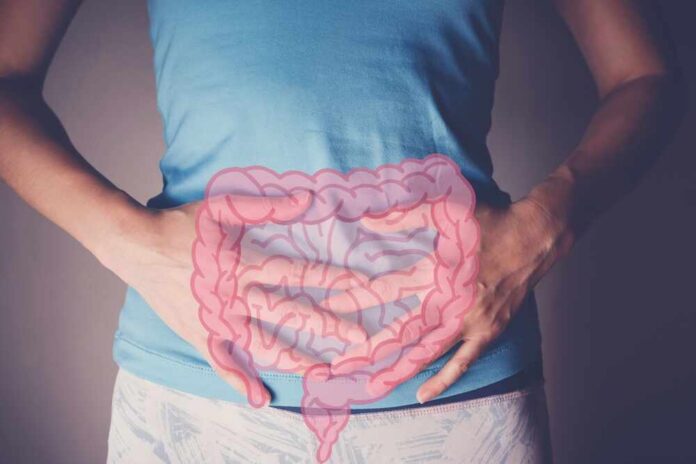
Your friendly gut bacteria wield syringe-like weapons to secretly inject proteins that hijack your immune system, turning passive passengers into active puppeteers.
Story Highlights
- Common gut microbes use type III secretion systems to pump effector proteins into intestinal cells, targeting NF-κB and cytokine pathways.
- Study mapped over 1,000 bacterial-human protein interactions, linking these systems to higher prevalence in Crohn’s disease patients.
- Paradigm shift: “Harmless” commensals mimic pathogen tactics like Salmonella, challenging views of microbiome passivity.
- Findings from Helmholtz Munich, announced March 27, 2026, open doors to targeted therapies beyond symptom management.
Discovery Details: Syringe-Like Injection Mechanism
Helmholtz Munich researchers, partnering with LMU, Aix Marseille University, and Inserm, identified type III secretion systems in common gut bacteria. These structures function as molecular syringes, injecting effector proteins straight into human intestinal epithelial cells. The team employed advanced microscopy and interaction mapping to uncover over 1,000 protein-protein contacts. Proteins disrupt immune regulation, including NF-κB signaling and cytokine production, which govern inflammation responses. This direct manipulation reveals bacteria’s proactive role in host physiology.
Historical Shift from Pathogens to Commensals
Type III secretion systems emerged in research during the 1990s, tied exclusively to dangerous pathogens like Salmonella and Yersinia that hijack cells for infection. Gut microbiome studies exploded after the 2007 Human Microbiome Project, spotlighting trillions of microbes shaping immunity and metabolism. Earlier work linked dysbiosis—microbial imbalance—to Crohn’s disease through 16S sequencing associations. This breakthrough extends the mechanism to non-pathogenic residents, proving friendly bacteria possess the same invasive tools. Such capabilities demand reevaluation of long-held microbiome assumptions.
Links to Crohn’s Disease and Rising IBD Trends
Crohn’s disease strikes about 1 in 250 Westerners, fueled by diets, antibiotics, and lifestyles disrupting gut balance. The study detected elevated type III genes in Crohn’s patients’ microbiomes, suggesting causal contributions to inflammation via TNF cytokines and barrier weakening. Precedents include Cleveland Clinic’s 2024 find of Tomasiella immunophila degrading secretory IgA, eroding gut defenses. Modern habits invite microbial opportunism, amplifying disease risk. Facts support prioritizing lifestyle corrections alongside medical advances.
Scientists find gut bacteria inject proteins that control your immune system
Gut bacteria aren’t just passive passengers—they can actively send proteins straight into our cells. Using microscopic injection systems, even harmless microbes can influence immune responses and…
— The Something Guy 🇿🇦 (@thesomethingguy) March 27, 2026
Complementary Human Defenses and Research Momentum
MIT researchers announced on March 16, 2026, that intelectin-2, a gut protein, binds bacterial sugars to bolster mucus layers and neutralize threats like Staphylococcus aureus. This two-layer defense counters bacterial incursions, highlighting host countermeasures. Helmholtz findings, released March 27, 2026, build on such momentum, validated in cellular models. Researchers quote: “Systematically mapping interactions suggests molecular mechanisms” for diseases. Evolutionary questions linger—coexistence or pathogenesis?—but data affirm active microbial influence over mere correlation.
Implications for Treatments and Affected Populations
Short-term, microbiome tests could screen type III genes for Crohn’s risk, refining diagnostics. Long-term, drugs blocking effectors promise cause-targeted therapies, eclipsing anti-TNF symptom relief. Over 3 million IBD sufferers worldwide stand to gain, alongside microbiology experts advancing probiotics. Economic ripples hit pharma’s $15 billion IBD market and nutraceuticals. Socially, personalized gut interventions empower patients. Politically, results bolster EU funding for infection biology, aligning with values of practical, evidence-based health solutions over vague interventions.
Sources:
Scientists find gut bacteria inject proteins that control your immune system
Scientists Discover Gut Bacteria Can Inject Proteins Into Human Cells
Protein found in GI tract can neutralize many bacteria
Protein found in GI tract can neutralize many bacteria
Gut bacteria use syringe-like systems to regulate immune responses
Cleveland Clinic researchers discover a new bacterium that causes immunodeficiency in the gut
Reprogramming our gut bacteria could be key to fighting disease
Scientists Develop New Gut Health Measure That Tracks Disease
Gut bacteria inject proteins into colon tissue