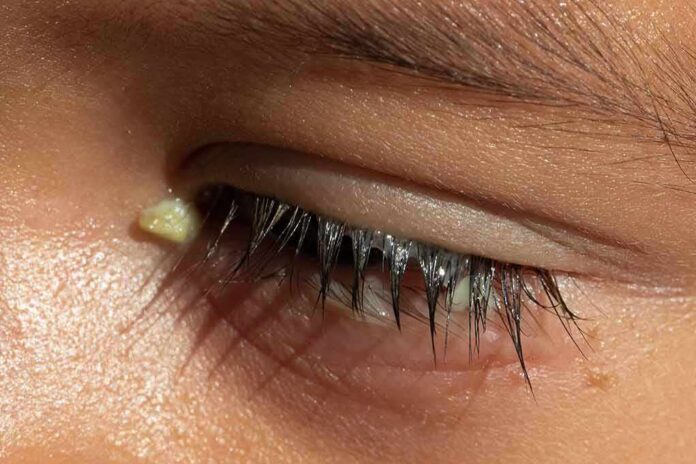
Tiny eight-legged mites live inside the hair follicles of most adults, and by the time you turn 70, almost everyone carries them.
Quick Take
- Doctors confirm that Demodex mites commonly live in human eyelash follicles, not just in myths or gross-out videos.
- Two species matter most: Demodex folliculorum lives near the lash base, and Demodex brevis lives deeper in oil glands.
- Most people carry these mites with no symptoms at all; trouble starts only when numbers grow too high.
- Eye doctors can spot a telltale sign called a collarette, a waxy sleeve of mite waste at the lash root.
- A simple eyelash pluck and microscope check can confirm an infestation, and treatments now exist to calm it down.
What Eye Doctors Actually Confirm About Lash Mites
The American Academy of Ophthalmology states plainly that Demodex mites can live inside human eyelash follicles. Cleveland Clinic backs this up, identifying Demodex folliculorum as a mite species that makes its home right at the base of your lashes. This isn’t fringe speculation. It’s standard material taught in eye clinics and printed in patient education pages nationwide.
A recent video from Isiah Factor: Uncensored brought this topic to a wider audience, asking viewers whether microscopic mites might be living on their own lashes right now. The video taps into a real, well-documented area of eye health. Ophthalmology sources have described these mites for years, long before any single video made the rounds online.
Two Species, Two Different Neighborhoods On Your Face
Scientists recognize two human-dwelling Demodex species, and they don’t live in the same spot. Demodex folliculorum clusters right around the eyelash follicles themselves. Demodex brevis prefers a deeper address, burrowing into the sebaceous and meibomian glands that keep your eyelids lubricated. Knowing which species shows up matters, because each one behaves differently and responds differently to treatment.
Carrying these mites is common, and age plays a huge role in who has them. Research published in a peer-reviewed review found Demodex prevalence climbs past 80 percent in people over 60, and reaches nearly 100 percent after age 70. Among younger, college-age populations, prevalence drops to a range of just 2 to 27 percent, showing how strongly age drives the numbers.
When Harmless Colonization Turns Into a Real Problem
Here’s the distinction that matters most: simply having mites is not the same as having an infestation that causes disease. The Academy’s EyeWiki notes that Demodex turns up at similar rates in people with no symptoms at all, and its exact role in triggering blepharitis, an inflamed eyelid condition, hasn’t been firmly nailed down by researchers. High density in the follicles, not mere presence, is what gets linked to chronic blepharitis and eye irritation.
Doctors do have a visible clue to watch for. Waxy, cylinder-shaped sleeves called collarettes can form around the base of an eyelash. The Academy explains these sleeves are made of mite waste and bits of irritated skin, and their presence gives doctors a strong, practical signal that mite overgrowth might be the culprit. One clinical study of over a thousand patients found collarettes showed up in nearly 70 percent of confirmed Demodex blepharitis cases.
How Doctors Confirm It, and What Can Be Done
Diagnosis doesn’t require guesswork. An ophthalmologist can examine the eyelid under a slit lamp to look for that telltale debris, then confirm the finding by plucking an eyelash and viewing it directly under a microscope. This two-step process turns a vague worry into a clear yes-or-no answer, and it’s the same method used in clinics across the country today.
The condition is far from rare once you account for untreated cases. One analysis estimated roughly 7 million people in the United States could benefit from treatment for Demodex blepharitis, yet only about 1.5 million have actually been diagnosed and treated. That gap suggests plenty of irritated, itchy eyelids out there are quietly going unaddressed, often mistaken for ordinary dryness or allergies.
Treatment has improved in recent years, moving beyond basic lid scrubs toward targeted options doctors can prescribe directly. For most people, though, the honest takeaway is reassurance rather than alarm. Having mites on your lashes is simply part of being human, and it only becomes a medical issue when density rises and symptoms like redness, itching, or crusting show up alongside it.
Anyone noticing persistent lid irritation, crusty lashes, or that waxy collarette buildup has good reason to ask an eye doctor for a quick check. It’s a fast, low-cost test with a clear answer, and treatment options exist if the mites turn out to be the source of the trouble.
The science here isn’t new or hidden. It’s settled clinical knowledge that a viral video simply put in front of a bigger audience, reminding everyone that the tiny world living on our eyelids is stranger, and more common, than most people ever imagined.
Sources:
youtube.com, aao.org, eyewiki.aao.org, ajmc.com, bottomlineinc.com