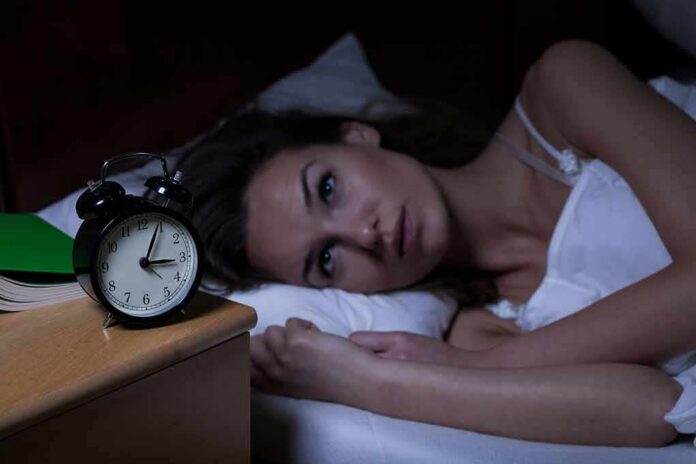
The part of sleep your body needs most for repair is the very part aging quietly steals first.
Story Snapshot
- Deep, slow-wave sleep drops steadily with age, starting earlier than most people think.
- Changes in brain circuits, melatonin, and cortisol rhythms push sleep to be lighter and more broken.
- Three practical levers help: light and timing, stress and cortisol control, and fixing “gut and meds” issues.
- These steps do not turn back the clock, but they can protect the deep sleep you still can get.
Deep sleep starts slipping long before you feel “old”
Most people assume deep sleep vanishes sometime after 70, but that slide starts much sooner. Large reviews by the National Institutes of Health show that deep, slow-wave sleep declines across adult life, not just in old age. Younger adults may spend about 20 percent of their night in deep sleep, while older adults often drop closer to 10 to 15 percent. That shift means more light, fragile sleep and more wake-ups at night. You feel it as “I slept, but I do not feel restored.”
Major medical sources line up on this point. MedlinePlus notes that older adults wake more often because they spend less time in deep sleep. Cleveland Clinic says older people sleep less, have more fragmented sleep, and spend less time in stage 3 deep sleep. This is not a rare disease pattern. It is the standard sleep architecture of aging. The question is not whether deep sleep declines. The question is how much of that decline is fixed and how much can be nudged.
The aging brain and clock make deep sleep harder to generate
Sleep is not just “feeling tired”; it is a complex dance between brain wiring and hormones. As the brain ages, the regions that create the slow waves of deep sleep weaken. A review led by University of California, Berkeley researchers found the aging brain has more trouble generating slow waves and sleep spindles that mark deep curative sleep. The parts of the brain that deteriorate earliest are the same areas that give us deep non rapid eye movement sleep. When the hardware fades, the signal for deep sleep loses strength.
The brain’s master clock also changes. Harvard sleep researchers explain that the system that controls when sleep is allowed and how strongly we crave it narrows with age. The internal sleep window shifts earlier in the evening and closes sooner toward morning. That creates the classic pattern many people over 50 know well: sleepy at nine, wide awake at four, and never quite satisfied with either. These brain and clock changes are normal biology, but they set the stage for lighter, broken nights.
Melatonin and cortisol: the two hormones that quietly reshape your nights
Melatonin and cortisol act like the green and red traffic lights of sleep. As we age, both lights start to misfire. Mayo Clinic reports that melatonin production drops with age, making it harder to fall asleep and stay asleep. The Sleep Foundation notes that the body secretes less melatonin and that this change disrupts circadian rhythms, shifting sleep earlier and making nights more fragmented. Lower melatonin means small noises, worries, or a trip to the bathroom kick you out of sleep more easily.
Cortisol, the main stress hormone, has its own age-linked twist. In healthy younger adults, cortisol drops at night and rises toward morning. With age, that curve often flattens. The night-time dip does not fall as low, and the early morning rise can start sooner. That means more “wired but tired” nights and abrupt early wake-ups. This is another reason the modern high-stress, late-night lifestyle clashes harder with aging biology than with youth. The body cannot shrug off constant stress without paying in deep sleep.
The three fixes: timing, stress, and what you put in your body
The popular video on this topic names three core reasons for lost deep sleep: slowing melatonin, a flattened cortisol rhythm, and malabsorption. It then promises three fixes. The research record strongly supports the first two reasons and partly supports the third, but it does not prove one magic protocol. What it does provide is three clear levers any older adult can use with real, if modest, impact: how you time light and darkness, how you manage daily stress, and how you handle gut and medication issues.
Deep sleep vs REM vs total sleep in 30 seconds: My take: total sleep is the aging lever; deep and REM are quality signals, but 7-9 hours gives the biology enough runway.#sleep #circadianrhythm #longevity #quantifiedself pic.twitter.com/zcRyKF7vv5
— SuperAge (@superageapp) July 29, 2026
Light and timing come first. Because the aging brain clock shifts earlier, bright morning light and dim, screen-free evenings help anchor melatonin and the sleep window. Stress control comes next. Keeping a reliable wind-down routine, limiting late caffeine and alcohol, and dealing with chronic worries all help cortisol fall at night instead of staying flat and high. Finally, gut and medication issues matter. Pain, reflux, nighttime urination, and certain drugs all break deep sleep. Working with a doctor to adjust these is not glamorous, but it is often where the biggest gains hide.
What the evidence says and where wellness claims go too far
Short health videos often sell the idea that three tricks will restore “young” deep sleep. The formal record does not go that far. The National Institutes of Health, Harvard, and Cleveland Clinic all treat reduced deep sleep as a normal part of aging, shaped by many overlapping causes rather than a single fix. There are promising ideas, like using sound to boost slow waves in older adults, but large randomized trials of simple nightly routines are still thin.
The sober takeaway is this: deep sleep decline with age is real and widely documented, but your choices can either speed that decline or resist it. Regular light exposure, earlier calming evenings, serious stress management, and cleaning up medical and gut factors will not turn a 70-year-old brain into a 25-year-old one. They can, however, protect the deep sleep you still can generate and keep that quiet nightly repair work going longer than the culture of “do more, sleep less” would allow.
Sources:
youtube.com, news.berkeley.edu, betterhood.in, distance.physiology.med.ufl.edu, menslongevityresearch.org, sleep.hms.harvard.edu, uchicagomedicine.org, theconversation.com, medlineplus.gov