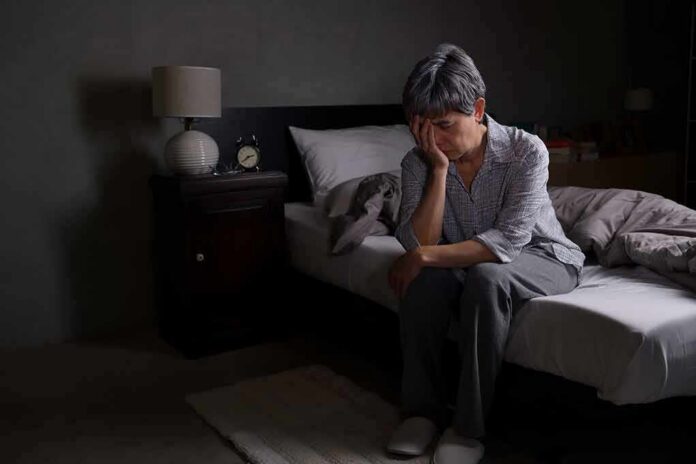
Millions of older adults wake up in the middle of the night and assume something is wrong, but sleep science shows that lighter, broken-up sleep is a normal part of getting older.
Quick Take
- Aging naturally shifts sleep timing earlier and reduces deep, consolidated sleep.
- A popular Sleep Doctor video says waking twice a night can be a normal pattern, not a disorder.
- Doctors warn that the same symptom — waking at 3 a.m. — can also signal chronic insomnia.
- Medical guidelines recommend specific steps for people who can’t fall back asleep.
Why Older Adults Wake More at Night
Sleep changes as people age. Research on sleep and circadian rhythms shows that older adults spend more time in light sleep and less time in deep, slow-wave sleep, making it harder to stay asleep for one long stretch through the night. Nighttime awakenings become more common, and total sleep time often shrinks, even in healthy adults who have no diagnosed sleep disorder.
Body clocks also shift earlier with age. Studies describe an age-related circadian phase advance, meaning older adults tend to feel sleepy earlier in the evening and wake up earlier in the morning, sometimes one to two hours sooner than younger adults. This earlier internal clock, combined with lighter sleep, helps explain why middle-of-the-night wakeups become more frequent later in life.
Sleep specialist Michael Breus, known online as the Sleep Doctor, addressed this pattern in a widely viewed video, framing a predictable two-part sleep period as a natural variation rather than a problem to fix. He pointed to the same basic biology doctors describe: less deep sleep, more light sleep, and an internal clock that moves earlier with age.
Normal Waking Versus a Sleep Disorder
The research describes a real medical distinction that matters here. Advanced sleep-wake phase disorder, where someone falls asleep and wakes up much earlier than they want to, is the most common body-clock sleep problem in older adults. That is different from insomnia, a separate condition where waking up at night causes real daytime problems like exhaustion, poor focus, or irritability.
The American Academy of Sleep Medicine treats middle-of-the-night waking as a symptom that needs a clinical look, not automatic reassurance. Its insomnia fact sheet says the key question is whether the waking causes daytime impairment, not simply whether someone wakes up at all. That distinction separates a harmless pattern from a condition that needs treatment.
This creates two honest, overlapping realities. Aging reliably brings lighter sleep and earlier waking for almost everyone. But those same biological changes can look identical to insomnia symptoms, which studies estimate affect roughly 30 to 48 percent of older adults, even though full insomnia disorder affects a smaller share, around 12 to 20 percent. The symptom alone does not tell you which one you have.
What Doctors Recommend for Middle-of-the-Night Waking
For people who do wake up and can’t fall back asleep, sleep medicine guidelines offer clear, practical steps. The American Academy of Sleep Medicine recommends getting out of bed if sleep doesn’t return quickly, avoiding the urge to force it, and keeping a consistent wake-up time every morning regardless of how the night went. Daytime naps are generally discouraged under this approach.
These steps apply whether someone has a mild, harmless pattern of broken sleep or a diagnosed insomnia disorder. The bigger takeaway for older adults is to pay attention to how the next day feels. Waking at night without daytime tiredness, memory problems, or mood changes points toward normal aging. Waking that leaves someone exhausted, foggy, or struggling to function is a signal worth raising with a doctor, especially since treatable causes like pain, medication side effects, or sleep apnea can also disrupt rest.
Sources:
youtube.com, jcsm.aasm.org, aasm.org, aafp.org, mayoclinic.org