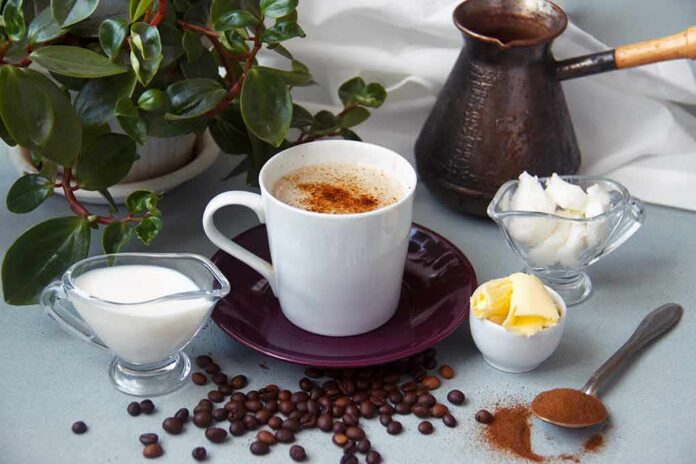
Your morning coffee habit hasn’t changed much in fifteen years, but it is quietly packing on far more calories than it used to, and the sugar packet isn’t the one to blame.
Quick Take
- Tufts University researchers found coffee-related calories jumped from 43 to 60 per day between 2003 and 2018, nearly a 40% rise.
- Americans drank roughly the same amount of coffee the whole time, about 13 ounces a day.
- Non-dairy creamer became the single biggest source of added coffee calories by 2018, beating out sugar and regular milk.
- The shift points to a bigger trend of swapping real dairy for processed add-ins that pack more hidden calories per scoop.
A Fifteen-Year Study Tracks What Americans Really Pour Into Their Cup
Researchers at the Gerald J. and Dorothy R. Friedman School of Nutrition Science and Policy at Tufts University dug into dietary surveys from about 30,000 U.S. adults age 20 and older. They tracked eight rounds of federal health data collected between 2003 and 2018. Their goal was simple: figure out why coffee, often treated as a near-zero-calorie drink, was quietly adding more to people’s daily diets without anyone pouring a bigger cup.
The results showed coffee volume barely moved. People still drank about 13 ounces a day in 2018, almost identical to 2003. But the calories tied to that same cup climbed from 43 to 60 per day, a jump researchers describe as nearly 40 percent. Something in the cup itself had changed, even though the amount of coffee had not.
That something turned out to be non-dairy creamer. By 2018, it contributed an estimated 18.5 calories a day to the average American’s coffee, more than sugar or syrup at 16 calories and regular dairy milk at 11 calories. Cow’s milk was still the most commonly added ingredient by weight, but creamer packed a bigger calorie punch per use.
Why A Little Tub Of Powder Outpaced Sugar And Milk
Non-dairy creamer is built from vegetable oils, sweeteners, and stabilizers rather than actual dairy, which lets manufacturers make it shelf-stable and cheap. But those same oils and added sugars mean a splash can carry more calories than people expect from something marketed as a lighter alternative to cream. Consumption of these add-ins rose notably across the study period, researchers found.
The rise tracks with a booming market. Plant-based and non-dairy creamer sales have grown steadily, with the broader U.S. coffee creamer category now valued near five billion dollars a year and projected to keep expanding through the early 2030s. Flavored pumps, powdered creamers, and single-serve pods have become grocery store staples, pitched as convenient and dairy-free without much attention to their calorie load.
What The Numbers Mean For Your Wallet And Your Waistline
Seventeen extra calories a day sounds small, but multiplied across a year it adds up to roughly six thousand additional calories, enough to matter for anyone watching their weight. The bigger issue is awareness. Many people view flavored creamers as a harmless treat, not realizing they now outweigh sugar as the top calorie source in coffee nationwide, according to the study authors.
Federal dietary surveys like the one used in this study rely on people accurately recalling what they ate and drank the day before, a method known to carry some natural reporting error even as it reliably captures population-wide averages. That limitation does not change the core finding. It simply means individual days vary while the overall trend toward more creamer and more calories holds steady across fifteen years of data.
Calories from Americans’ daily coffee rose nearly 40% over 15 years, even though they drank roughly the same amount
The biggest reason wasn’t sugar, but non-dairy creamer, which became the largest source of added coffee calories pic.twitter.com/hLymtX03Gd
— Interesting AF (@interesting_aIl) October 25, 2026
For coffee drinkers who pride themselves on cutting sugar, the real lesson may be reading the creamer label just as closely. A product built to replace cream without the guilt has quietly become the biggest calorie contributor in the cup, and most Americans never noticed the swap happening right under their nose.
Sources:
mindbodygreen.com, now.tufts.edu, sciencedaily.com, miamiherald.com, medicaldaily.com, bmj.com, ars.usda.gov