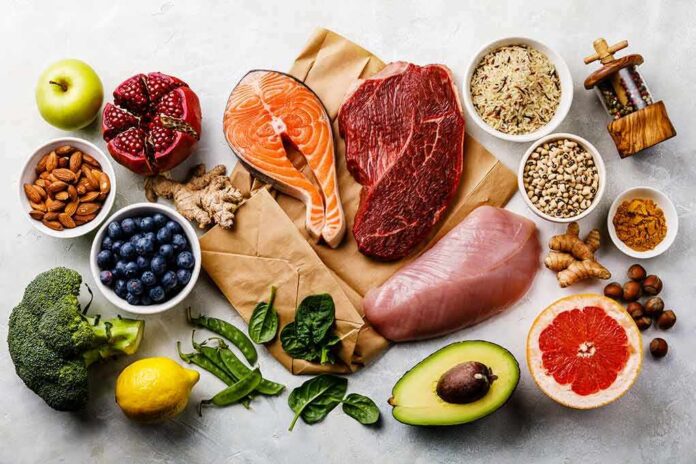
The most useful way to think about protein today is not “how many grams did I eat?” but “what overall nutrient and health package came with those grams — and from which source?”
The Short Version
- Classical protein quality scores still revolve around indispensable amino acids and digestibility; they remain the technical standard.
- Large cohort studies and trials show that higher amino-acid scores for animal protein do not reliably translate into better long-term health than plant protein.
- The source of protein — the whole “package” of saturated fat, fiber, sodium, and other nutrients — is consistently more predictive of chronic disease risk than total grams alone.
- Plant-rich protein patterns tend to be linked with better cardiometabolic outcomes and lower mortality, even when their chemistry-based quality scores are lower.
- A modern, practical view separates “protein adequacy” (can this food meet amino-acid needs?) from “food healthfulness” (does this pattern support better long-term health?).
From Amino-Acid Scores to Real-World Health: How the Debate Is Shifting
For most of the last century, “protein quality” was a strictly biochemical concept. A protein was considered high quality if it was easily digested and provided enough of each indispensable amino acid (IAA) to support growth and maintain body proteins. Systems such as the Protein Digestibility-Corrected Amino Acid Score (PDCAAS) and the more recent Digestible Indispensable Amino Acid Score (DIAAS) quantify this adequacy by combining amino-acid composition with digestibility measurements, typically based on ileal absorption studies.
Those metrics remain the formal standard in FAO and NIH guidance; both institutions explicitly define protein quality in terms of IAA sufficiency plus digestibility, not chronic disease outcomes. In other words, the official question has long been: “Does this protein meet human amino-acid requirements efficiently?” — not “Does eating this protein source help you live longer or avoid heart disease?”
Over the past two decades, however, the evidence has become too noisy to ignore: food sources that score as “lower quality” on amino-acid chemistry often perform better on health outcomes than those that score higher. This disconnect is the heart of the current protein paradox.
What Traditional Protein Quality Metrics Actually Measure
Classical protein quality systems were built for a specific job: preventing deficiency. They emerged from nitrogen balance studies and growth models in animals, later adapted for humans, where the goal was to ensure that limited protein supplies could maintain lean tissue, support growth, and prevent overt malnutrition.
Modern metrics still reflect that origin. DIAAS and related scores use:
- the content of each indispensable amino acid
- its true ileal digestibility, ideally measured directly
- a reference pattern of human amino-acid requirements for a given age group
FAO’s 2013 report, for example, explicitly recommends basing protein quality assessment on true ileal digestibility of individual amino acids, not on broader outcome data. Major reviews reiterate that the “quality” of a dietary protein refers to its ability to provide the EAAs needed to meet requirements; adequacy of nitrogen and amino acids, not mortality or cardiovascular endpoints, is the defining criterion.
Within this framework, animal-source proteins — eggs, dairy, meat — typically score higher. They are more completely digested and more closely match the human indispensable amino-acid pattern, especially for lysine and methionine. Many plant proteins, particularly from cereals, have one or more limiting amino acids and lower digestibility; by classical scoring, they are “lower quality.”
The Protein Paradox: High Scores, Mixed Outcomes
When researchers stepped back from the lab bench and looked at real-world health outcomes, the neat hierarchy implied by amino-acid scores started to unravel. A recent review, pointedly titled “Protein Paradox: Protein Quality Based on Amino Acids Composition is Poorly Associated with Health Outcomes,” summarizes the issue bluntly: animal-derived proteins achieve higher amino-acid–based quality scores, yet these advantages do not consistently translate into superior cardiometabolic or mortality outcomes.
Randomized trials and large prospective cohorts show that substituting plant-based proteins for red and processed meats often improves cardiovascular risk markers — lowering LDL cholesterol, blood pressure, or inflammatory markers — and is associated with reduced risk of chronic disease. In populations with adequate total protein intake, modest differences in digestibility and amino-acid scoring between protein sources are unlikely to produce meaningful differences in long-term health.
Put differently: chemistry-based protein quality captures a limited but important aspect of nutrient adequacy. It tells you whether a given protein can efficiently meet amino-acid needs. It does not tell you whether the food it comes in will help prevent heart disease, cancer, or premature death.
Source Over Amount: The Protein “Package” Concept
Alongside the protein paradox, another message has emerged from cohort studies and public health analyses: the source of protein — and the nutrient package it carries — matters more for long-term health than the sheer amount of protein consumed.
Harvard’s Nutrition Source, synthesizing decades of work from Nurses’ Health Study, Health Professionals Follow-Up Study, and other cohorts, concludes that it is the protein “package,” not grams alone, that likely makes the difference for chronic disease risk. Eating beans, nuts, fish, or poultry instead of red and processed meats reduces the risk of several diseases and of premature death, even when total protein intake is similar.
This is consistent with systematic reviews: vegetable protein intake is repeatedly associated with decreased risk in many studies, while evidence linking total protein intake to mortality and morbidity remains suggestive to inconclusive. Umbrella reviews reinforce that the source of dietary protein is a key factor that needs better consideration, as different sources carry very different profiles of saturated fat, heme iron, sodium, nitrates, fiber, and bioactive compounds.
From a practical standpoint, swapping 30 grams of protein from processed meat for 30 grams from lentils is not a neutral move. You change saturated fat and sodium intake, increase fiber and micronutrients, and alter the food’s impact on lipids, glycemic control, and gut microbiota — all without changing your “protein grams.” This is why source routinely outperforms amount as a predictor of chronic disease outcomes.
Plant vs. Animal Proteins: What the Outcome Data Actually Show
When you move beyond nitrogen balance and track clinical endpoints, a pattern emerges. Viewpoint and review articles integrating cohort and trial evidence conclude that greater consumption of plant protein sources — legumes, nuts, seeds, whole grains — is generally associated with reduced risks of cardiovascular disease, some cancers, and lower mortality, particularly when replacing red and processed meats.
Substitution analyses are especially telling. When researchers model the effect of replacing one serving of red meat with plant protein sources, they consistently see lower risk of coronary heart disease, type 2 diabetes, and all-cause mortality. These findings hold across diverse populations and dietary patterns, suggesting that source-specific attributes — not total protein — drive much of the risk.
At the same time, animal proteins play a clear role in functional outcomes, especially in older adults. Recent work in aging populations shows that higher protein intake — often at or above 1.0 g/kg/day — with substantial contributions from high-quality animal proteins is associated with lower risks of frailty, falls, mobility limitations, and mortality. For preserving muscle mass and physical function, intake level and the presence of easily digestible, leucine-rich proteins matter.
The emerging synthesis is straightforward: plant proteins generally perform better on cardiometabolic and environmental metrics, while adequate total protein (often anchored by some high-DIAAS sources) remains crucial for muscle and functional health. The question against this backdrop is not “plant or animal?” as a binary, but “which combination of sources delivers both amino-acid adequacy and favorable long-term health outcomes?”
What the data actually shows:
Large cohort studies (e.g., Nurses’ Health + Health Professionals) found higher protein (especially when replacing carbs, and plant + quality animal sources) associated with lower odds of subjective cognitive decline.
Systematic reviews of RCTs show…— Dr.Sayajirao Gaikwad (@DietDrsayajirao) July 30, 2026
Redefining Protein Quality: Separating Adequacy from Healthfulness
Given these findings, several expert groups have argued for modernizing the concept of protein quality. A public health perspective from Table Debates and related academic work proposes explicitly distinguishing between:
- protein quality as an adequacy metric (can this protein meet amino-acid needs efficiently?), and
- food or diet quality as a health and sustainability metric (does this pattern improve clinical outcomes and reduce environmental burden?).
Recent reviews stress that the concept of protein quality must expand to incorporate newly recognized actions of proteins and amino acids beyond growth and nitrogen balance — including roles in bone health, gastrointestinal function and microbiota, glucose homeostasis, cell signaling, and satiety. Others propose nutrient-based frameworks and composite indices that integrate amino-acid content, micronutrient density, and environmental impact.
Yet, it is important to be clear: FAO, NIH, and most methodologically focused reviews have not abandoned amino-acid–based scoring. They still recommend DIAAS and related systems as the primary tools for evaluating protein adequacy, and they caution that health effects are influenced by many variables beyond protein per se. In effect, the field is moving toward a layered model rather than a single “magic” quality number.
Practical Takeaways: How to Think About Protein in Everyday Diets
For an individual trying to eat well, the implications of this debate are relatively concrete.
First, ensure adequacy. Most healthy adults benefit from protein intakes at or modestly above the current Recommended Dietary Allowance, especially beyond midlife, to support muscle mass, bone health, and functional capacity. In this respect, both animal and plant proteins can contribute effectively, particularly when plant proteins are varied and combined to cover limiting amino acids.
Second, prioritize the source. Ask what else arrives with the protein: saturated fat or fiber, sodium or potassium, heme iron or phytochemicals. A pattern that leans heavily on legumes, nuts, seeds, intact whole grains, fish, and modest amounts of poultry or dairy will generally outperform one centered on processed meats and refined products, even if both deliver the same total grams of protein.
Third, stop treating amino-acid scores as a proxy for health. High-DIAAS proteins are excellent tools for meeting amino-acid needs — crucial in childhood, pregnancy, illness, and for older adults trying to maintain muscle. But their superiority on that metric does not automatically mean they are superior for long-term cardiometabolic health, especially when they come packaged with high saturated fat, sodium, or other risk-promoting components.
Finally, recognize the distinction emerging in the literature: “protein quality” in the technical sense is about adequacy; “food healthfulness” is about outcomes. The evidence to date supports using protein scores as one input into dietary planning, not as the master key to chronic disease risk.
Sources:
nutritionfacts.org, pmc.ncbi.nlm.nih.gov, sciencedirect.com, ncbi.nlm.nih.gov, frontiersin.org, academic.oup.com, pubmed.ncbi.nlm.nih.gov, pubs.acs.org, mdpi.com, idealprotein.com, en.wikipedia.org, fao.org, healthline.com, cambridge.org, cliffsnotes.com