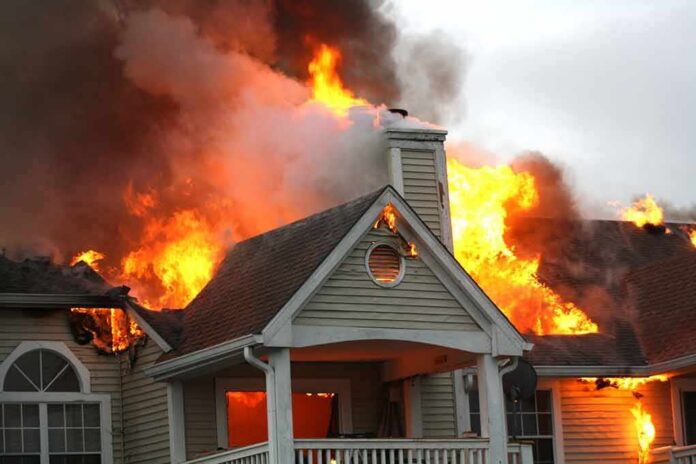
The leading cause of house fires in America is cooking, not extension cords.
Story Snapshot
- National data shows cooking drives the most residential fires by a wide margin.
- Electrical hazards still injure and cost billions, but rank behind cooking in frequency.
- Simple kitchen habits cut the bulk of fire risk fast and at low cost.
What the numbers say about house fires
Federal fire statistics put cooking at the top of residential fire causes year after year. The United States Fire Administration reports cooking leads the nation’s residential building fires across the last decade, and most recent annual snapshots show the same ranking. A focused review of 2017 to 2019 estimates found cooking accounted for about half of residential building fires, a share far above any other single cause. National Fire Protection Association research from 2019 to 2023 also lists cooking as the leading cause and driver of injuries.
This pattern holds across different kinds of homes. In one- and two-family dwellings, cooking still leads by a notable margin. In multifamily buildings, cooking’s share is even larger because so many incidents stay small and confined to the kitchen area. These are not edge-case studies. They come from standard national datasets fire departments use and trust. The simple baseline is clear: more fires start in the kitchen than anywhere else, again and again.
How cooking fires actually start—and how to stop them
Most cooking fires do not start with fancy appliances. They start when someone walks away. The National Fire Protection Association finds unattended cooking is the leading factor behind cooking fires, injuries, and deaths. Ranges and cooktops dominate those incidents because open burners and hot oil turn seconds into flame. The United States Fire Administration’s review of nonconfined cooking fires likewise points to unattended equipment as the top ignition factor. A timer, a lid within reach, and staying in the kitchen change the odds fast.
Real fixes cost almost nothing. Keep a lid or sheet pan near the stove to smother a small pan fire. Do not throw water on grease. Clean the cooktop so stray oil and crumbs do not feed flames. If you must step out, turn the burner off. For older adults, add simple tech like a stove sensor or auto-shutoff device. Landlords can add range-top suppression canisters in multifamily units to catch early flames. These steps match the largest risk with the simplest tools.
The right way to rank your home fire risks
Think in three tiers. First, tackle cooking because it causes the most fires. Build habits that keep you at the stove, set timers, and keep lids handy. Second, treat electrical as a high-impact, lower-frequency risk. Replace damaged cords, avoid daisy-chained strips, and match space heaters to dedicated outlets. If a breaker trips, find out why, not how to work around it. Third, scan the rest: working smoke alarms, clear exits, and smart heater use in winter. This order follows the data and respects your wallet.
Public agencies repeat the same message because their crews see the same scenes. Cooking drives volume. Electrical problems drive a share of the worst losses. Both deserve attention, but the first cut should go where most fires start. That is practical, evidence-based, and aligned with personal accountability. Keep the kitchen under your control, and you remove the biggest spark from your home life.
Sources:
youtube.com, usfa.fema.gov, nfpa.org, zipdo.co