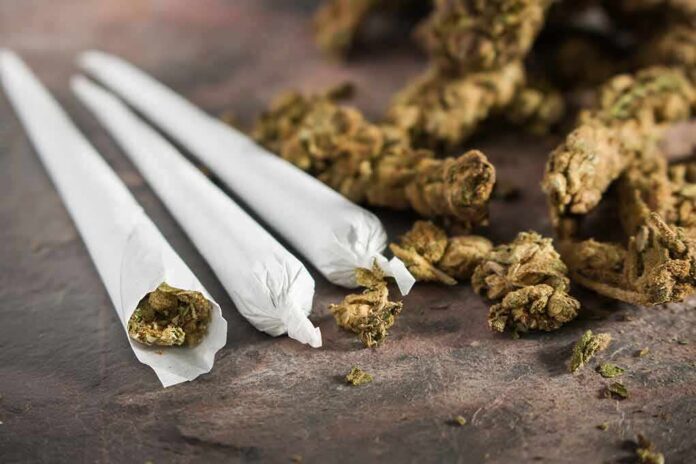
More adults in Canada now smoke or eat cannabis every day than drink alcohol every day, according to a new nationally representative study.
Quick Take
- A study in the Canadian Medical Association Journal found 5.7% of Canadian adults use cannabis daily, compared with 5.2% who drink alcohol daily.
- Researchers pulled data from nearly 100,000 people through the 2023-2024 Canadian Community Health Survey.
- The gap is widest among younger adults, with men aged 25 to 34 showing the biggest split between daily pot use and daily drinking.
- Daily cigarette smoking still tops both habits overall, at 8.5% of adults.
What The New Survey Actually Found
The study, published in the Canadian Medical Association Journal (CMAJ), compared daily or near-daily use of cannabis, alcohol, and cigarettes across Canada. Researchers found 5.7% of adults use cannabis every day, versus 5.2% who drink alcohol every day. That works out to roughly 1.8 million people lighting up or dosing daily, based on the survey’s national projections.
The numbers come from one of the largest health surveys Canada runs, covering nearly 100,000 respondents aged 18 and older. That size gives the findings real statistical weight, unlike smaller polls that get tossed around in policy debates. The lead author called the shift significant enough that “we have to take daily cannabis use pretty seriously”.
Young Men Are Driving The Trend
The crossover is not spread evenly across the population. Men between 25 and 34 reported daily cannabis use at 10.8%, compared to just 2.9% who drink alcohol daily in that same group. That is not a narrow gap. It is nearly a four-to-one split favoring cannabis among young men, a pattern researchers describe as a generational change rather than a blip.
Adults under 50 overall are now more likely to use cannabis daily than to drink daily, according to the research team at McMaster University, which helped lead the analysis. Daily cannabis use among adults under 35 has also climbed close to daily cigarette smoking rates in that age group, a comparison the study’s authors flagged as notable.
Six Years After Legalization, A Clear Shift In Habits
Canada legalized recreational cannabis in October 2018. Since then, researchers tracking public health outcomes say cannabis use ticked up modestly in the first year or two after legalization, then leveled off at a higher baseline than before. Alcohol use, by contrast, has stayed fairly stable over the same stretch, which is part of why the daily-use lines eventually crossed.
It is worth being precise about what crossed and what did not. This study measured daily or near-daily use frequency, not total volume consumed, spending, or overall health damage. Alcohol still drives far more emergency room visits and chronic disease burden nationally than cannabis does. The finding is about habit frequency, a specific and narrower claim than “cannabis has replaced booze” in Canadian life.
Why Daily Use Specifically Matters To Health Officials
Health Canada’s own guidance singles out frequent cannabis use as a red flag. Daily or near-daily use is “among the strongest and most consistent predictors of severe and/or long-term cannabis related health problems,” the agency states in its lower-risk use guidelines. That is why researchers did not just ask whether people used cannabis, but how often, since frequency tracks closely with risk.
🇨🇦 More Canadians now use cannabis daily than drink alcohol daily, a new CMAJ study finds.
5.7% of adults (~1.8 million people) report daily or near-daily cannabis use, vs 5.2% for alcohol. Daily cigarette use is still highest at 8.5%. Survey of nearly 100,000 people, 2023–24.…
— Four Twenty Maps (@420mapsco) November 23, 2026
Broader legalization research backs up the mixed picture. Studies tracking Canada five years after legalization found cannabis-related emergency visits and hospital admissions mostly increased or held steady, even as cannabis arrests dropped sharply. The policy clearly reduced illegal market activity. It just did not reduce how often people are using the product, and for some groups, use climbed higher than drinking ever was.
What This Means Going Forward
A legal product that normalizes daily use among young men deserves scrutiny, not celebration, regardless of how it compares to alcohol. Replacing one daily habit with another is not obviously progress just because it swaps a legal drug for a different legal drug. Parents, employers, and policymakers now have hard numbers showing cannabis has settled into daily routines for nearly 2 million Canadians, concentrated heavily among the young.
The researchers behind the study plan to keep tracking these trends as more survey years come in. For now, the data gives a clear snapshot: cannabis has moved from an occasional legal novelty to a daily habit that rivals, and in some groups outpaces, drinking itself.
Sources:
youtube.com, cmaj.ca, cbc.ca, news.mcmaster.ca, sciencesources.eurekalert.org, ca.news.yahoo.com, canada.ca, globalnews.ca